I'm writing the article, incorporating Serpmantics keywords naturally throughout.
🙂 That's the face with a slight smile : this emoji appears to be polite and kind. In writing, this smiley is often perceived as cold, aloof.
Test your knowledge of emojis like 🙂 with the quiz below:
You can also find out more by clicking here are the 10 emojis that 9 out of 10 people misunderstand. And you, do you really know them?
🙂: What does the smiley face with a slight smile mean?
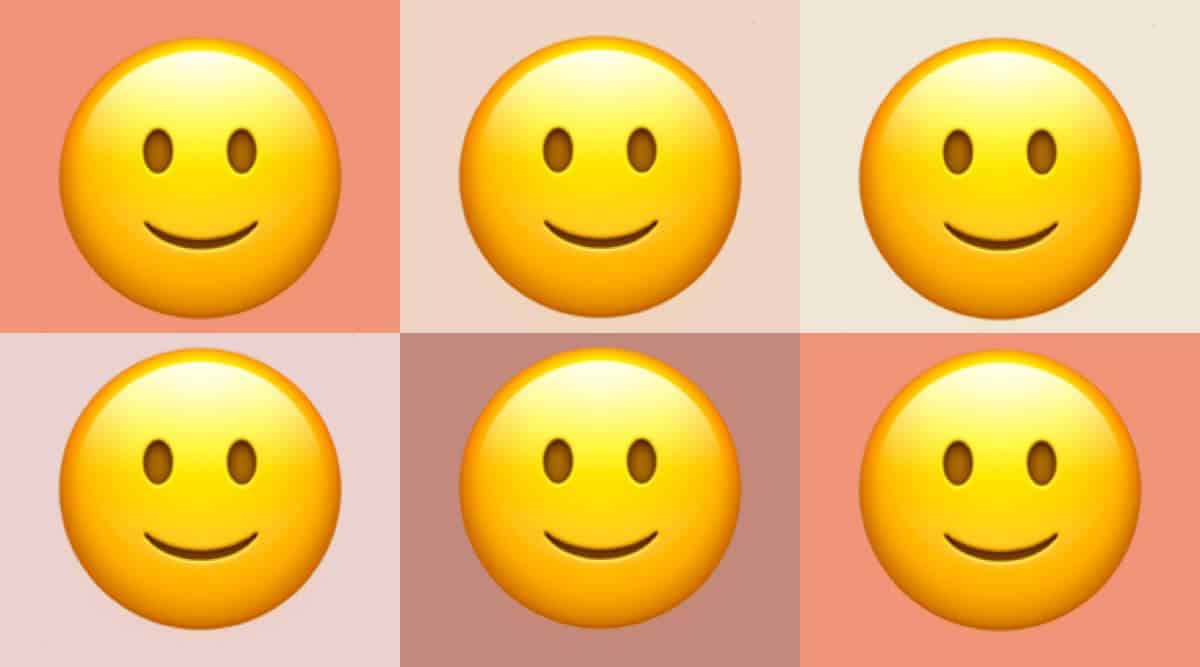
His official name is face with a slight smile. It is a yellow face to the round shape characteristic of the emojis. It shows two neutral round eyes and an with a slightly upturned mouth. This subtle smile expresses A polite agreement, without going overboard.
Sa meaning has changed among younger people. Many now read 🙂 like a wry smile, or even slightly sarcastic. Media outlets such as Axios have documented this reading passive-aggressive at the Generation Z.
A simple “Ok 🙂” after a disagreement doesn’t come across the same way message than a warm “Ok 😊.” The first one sounds curt. The second one sounds sincere.
🙂 or 😊: What's the difference?
Both emojis are similar, but the message The one sent is not the same.
- Face with a slight smile 🙂 : smile restrained, neutral, sometimes ambiguous.
- Smiling face 😊 with the smiling eyes and rosy cheeks: sincere and genuine warmth joy.
- Big smile 😀 : joy candid and enthusiastic, with no ambiguity.
- A beaming smile 😁: exuberance and boundless cheerfulness.
The difference lies in the eyes. the smiling face 😊 has the eyes creased by the smile. the face 🙂 has the eyes neutral. It is this shape of the eyes which gives the impression of smiling face cold or aloof.
Examples of messages with 🙂
The way you uses this emoji changes everything. Here are some examples specific to the context:
- “Thanks for your help 🙂” one message polite, kind, without being overly’enthusiasm. This smiling face expresses A sincere but moderate agreement.
- “Have a great day 🙂” : At the end of the conversation, this emoji expresses a natural warmth. The conversation ends on a friendly note.
- “Whatever you say 🙂” : After a disagreement, this face sounds passive-aggressive. The message The reality is often, “I’m not convinced, but I won’t push the issue.”.
- “Happy birthday 🙂” : for a party, this face sounds impersonal. Use 🥳 or 😄 instead express a real joy.
- “Great job 🙂” : from a superior, this emoji can to mean a polite compliment, not necessarily a enthusiasm actual.
If you receive a 🙂 and aren't sure what it means, look at the context. In a casual tone, it means a sincere smile. A disagreement right before that is probably just’irony. Reply to the bottom of the message, not at the’emoji alone.
How do you use the 🙂 emoji?
It all depends on the context. Here are some different ways to’use this emoji :
- In a positive way : “Thanks for your help 🙂”—keep it simple, polite, and kind.
- In a professional manner : Send 🙂 to indicate your agreement in a message at work expresses a lighthearted, cheerful mood, without too much’enthusiasm.
- In an ambiguous way : “Whatever you want 🙂” can quickly come across as cold, or even ironic.
- In a neutral manner : uses 🙂 for express a polite agreement reached during a conversation without showing any strong emotions.
Copy the emoji 🙂
To copy the face with a slight smile, click on the symbol below, then press Ctrl+C:
🙂
You can’send in all your posts and publications on social networks. This emoji runs on iOS, Android, Windows, Mac and all websites modern. Just paste it into a conversation.
The Most Popular Smiley Face Emojis
There are many emojis in the category smiling faces. Here are the top popular and what each person means :
- Smiling face 😀 : joy simple and straightforward. This smiling face expresses a general sense of good cheer, without any ulterior motives.
- Smiling face with older children eyes 😃 : enthusiasm visible. The eyes wide open spaces of this smiling face mean a joy sincere.
- Smiling face with smiling eyes 😄 : joy expressive. The eyes pleated express a smile Authentic and warm.
- Smiling face to the max 😁: exuberance. This smiling face with smiling eyes means an overflowing sense of cheerfulness.
- Smiling face 😊: sincere warmth. The smiling eyes of this smiling face express a real joy and kindness.
- Face with a slight smile 🙂: polite agreement, sometimes ironic. the emoji name summarizes its ambiguity.
- Smiling face with a halo 😇: feigned innocence. This smiling face means often irony or playfulness.
- Smiling face with hearts 🥰 : love and tenderness. The little ones hearts around the eyes express a strong feeling.
- Smiling face with heart-shaped eyes 😍: total admiration. This smiling face means a quick heart or a sudden passion.
- Smiling face with eyes star-shaped 🤩: intense wonder. This smiling face expresses a joy overflowing and the’enthusiasm.
- Smiling face foodie 😋: a craving for food. This face emoji means a joy related to food or a strong desire.
- Smiling face who sends a kiss 😘: affection and love. This smiling face expresses sincere affection.
- Smiling face with tears of joy 😂: intense laughter. The tears that flow mean that we cries to laugh.
- crying face 😢: sadness. This face expresses a emotion painful, with just one tear on the cheek.
- Smiling face with glasses 🤓: intellectual passion. This emoji means a enthusiasm whether you're an enthusiast or just curious.
These emojis all belong to the categories smiling faces from the switchboard Unicode. Everyone expresses a sentiment or a emotion different.
Smileys, emoticons, and emojis: What's the difference?
These three symbols are often confused. Here is the distinction, with some examples :
- A smiley refers to a smiling face round and yellow. This symbol expresses there joy in its shape the simplest. The name “smiley” means literally “smiling” in English.
- A emoticon is a face made up of typographic characters, such as 🙂 or ;-). It's a unique way to’express of the feelings in writing before the advent of print. These symbols appeared long before the emojis modern.
- A emoji is a digital image standardized by the consortium Unicode. Every emoji has a unique code. Today, there are more than 3 700 in all categories: faces, hands, food, nature, and many others.
In common usage, smiley and emoji are used as synonyms. But technically, a emoji covers much more than just a smiling face. A smiley is a face, a emoji can be any symbol.
Unicode Code and Compatibility of 🙂
Its official code is U+1F642, under the name English slightly smiling face. This symbol belongs to the category of smiling faces. He is used to express a lighthearted joy or a polite agreement in a message.
It appears on all the major platforms : iOS, Android, WhatsApp, Google, Microsoft and Twitter. There color yellow and the shape of the mouth vary slightly from one version to the other. On Google, the rendering may appear more neutral than on Apple.
Where does the 🙂 emoji come from?
Be careful not to confuse two things. The yellow smiley designed by Harvey Ball in 1963 is an advertising logo, not a emoji digital.
L'emoji 🙂 is much more recent. It has been added to the standard Unicode 7.0 in 2014, followed by the Emoji 1.0 standard in 2015. Since then, it has been used all over the world.
The creation of the emojis The origins of modern [...], can be traced back to Japan in the 1990s. NTT DoCoMo and SoftBank were the first to launch Japanese emojis on mobile. Apple made them popular in the West in 2011, with their integration into iOS.
The consortium Unicode is now responsible for their standardization. It ensures the compatibility of each symbol on all the platforms.








 English