To Update your graphics card, you have three options: go through Windows Update (automatic), use the software from your manufacturer (NVIDIA, AMD Where Intel), or download the pilot manually on the official website.
Explanatory video in French by Alucare, ideal complement to the page. View video (you can use YouTube's automatic translation)

Why Upgrade Your Graphics Card?
An outdated graphics driver can cause performance drops, in-game crashes, or display issues. Update the GPU driver ensures compatibility with the latest games, fixes known bugs, and improves system stability.
The manufacturers as NVIDIA, AMD and Intel They regularly release new versions of their drivers, often in conjunction with the release of major games or security patches.
How do I update my graphics card?
The most universal method involves the Device manager for Windows. It works on any PC, whether your graphics card is NVIDIA, AMD Where Intel. Here are the steps to follow:
- Make a right click on the menu To start up, then search Device manager.

- All of your computer's devices will be displayed. Scroll down the line Graphics Cards.
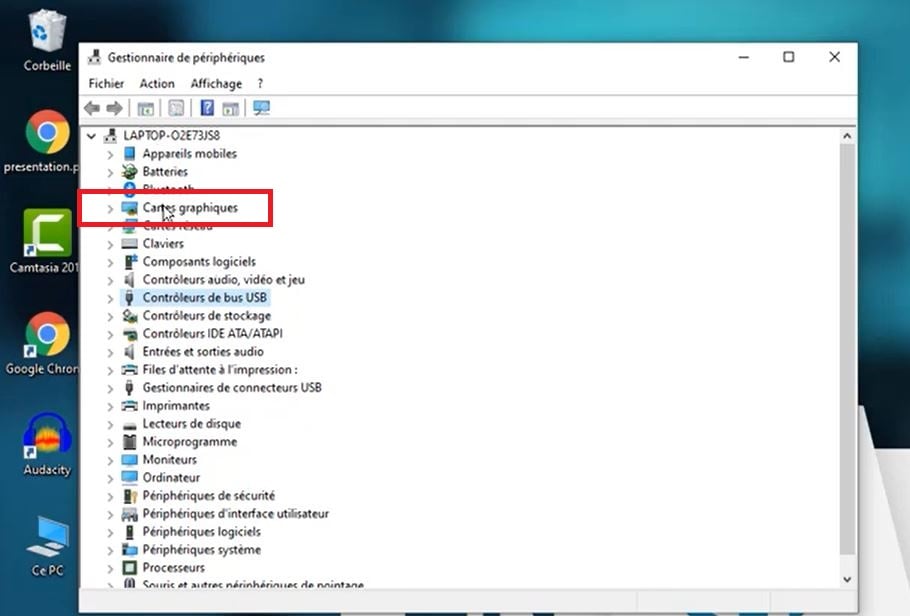
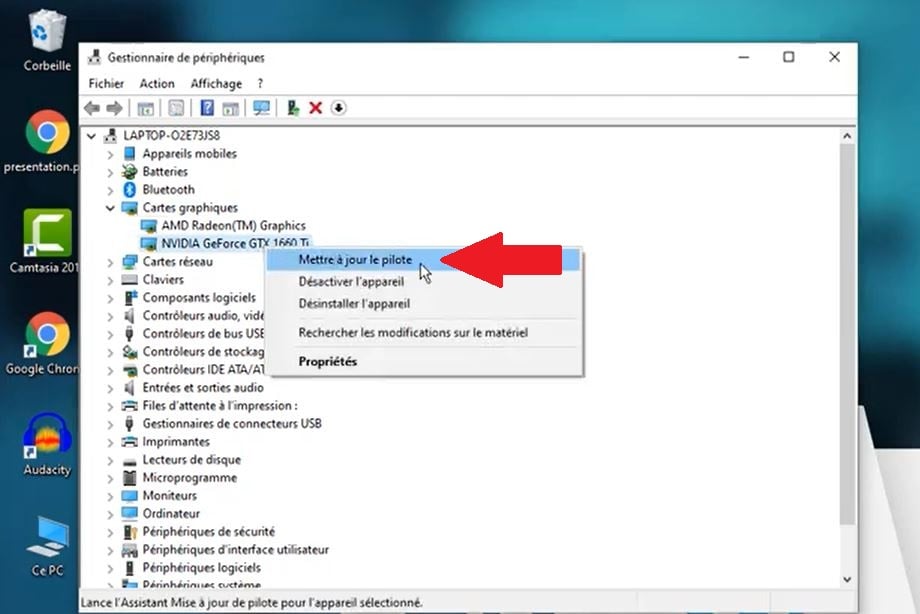
- Make a right click Click on the name of your graphics card, then select Update Driver.
- Click on Automatically search for drivers.
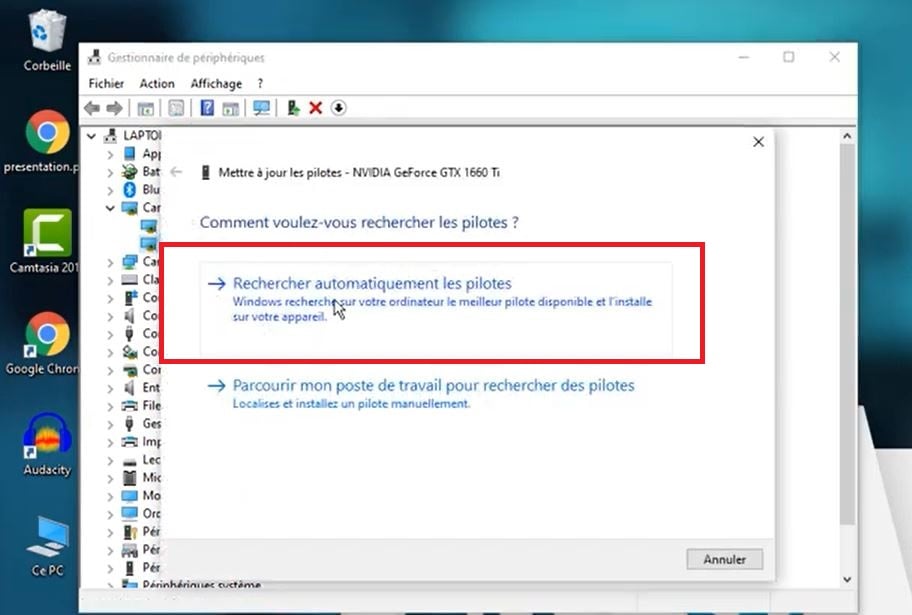
- Let Windows download and install the graphics driver, then complete the installation. If you have multiple graphics cards, repeat the procedure for each one.
Warning: the Device manager does not always offer the latest version the driver. If Windows can't find a newer version, it's best to go directly through the manufacturer's software.
If you encounter a problem after installation, be sure to Restart your graphics card from Windows to start over with a clean slate.
You can also check out our guide to monitor the temperature of your graphics card after the update.








 English