Before getting straight to the heart of the matter, it's important to know what concrete is. Generally speaking, concrete is a mixture of sand, water, gravel, cement and, in some cases, additives. Concrete must be characterized by its strength, its suitability for placing, and much more besides. It's important to know that the quantity of each component depends on a standard.
And to regulate the strength of a concrete mix, you can vary the quantity of cement used in the mix. In fact, the variation in the quantity of cement in a concrete mix is called "proportioning". There is a wide range of dosages according to technical standards, such as 150 kg/m3 and 350 kg/m3.
But the most commonly used dosage for reinforced concrete is 350 kg/m3 for making stairs, posts, slabs, etc. These terms indicate the quantity of cement to be used for 1m3 of concrete. However, the choice of a dosage depends very much on the usefulness of the concrete. It is essential to know that the dosage also concerns laying mortars for making masonry and also mortars for coatings.
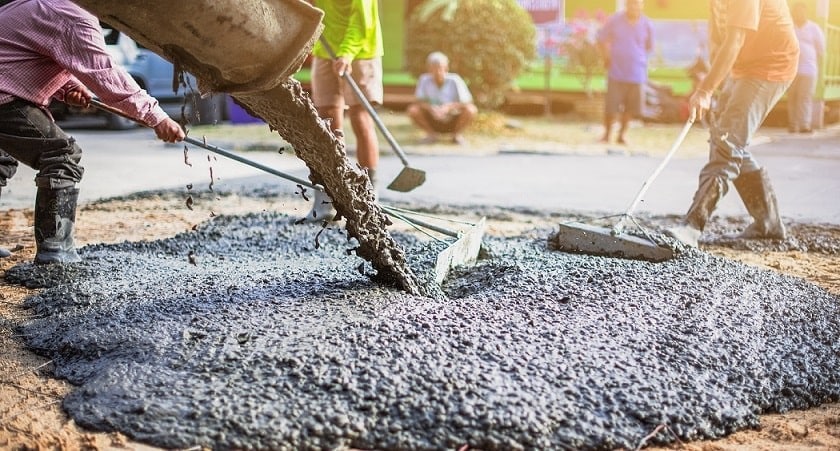
The number of bags of cement per 1m3 of concrete
As shown in the information above, the amount of cement for 1m3 of concrete depends on the dosage. And in turn, the choice of dosage must be adapted to the type of work to be carried out. When we talk about concrete dosage, we mean the quantity of cement to be used.
Therefore, if we say "concrete dosed at 350 kg/m3 », this means that for 1m3 of concrete, 350 kg of cement must be used including 10 bags of cement of 35 kg or 7 bags of cement if a bag weighs 50 kg. Similarly, if we want to achieve 100 liters or 0.1 m3 of concrete, the quantity of cement to be used is 1 bag of 35kg.
For the other components, if you want to make 1m3 of fresh concrete, 150 liters of water, 500 liters of sand and 700 liters of gravel must be prepared. To do this, these quantities can be measured using a graduated mason's seal.
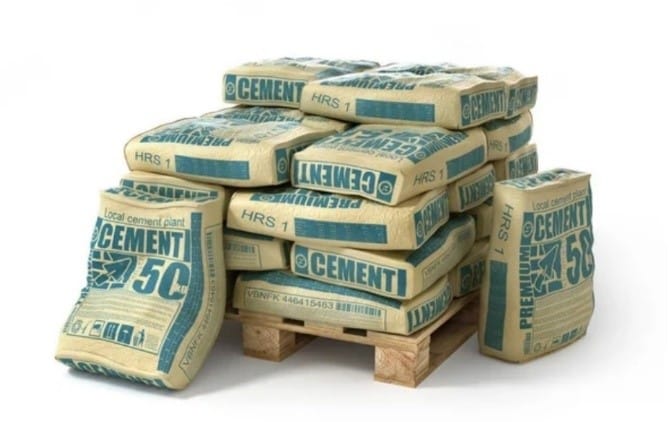
The number of bags of ready-mixed concrete per 1m3
If you want to use ready-made concrete for your work, you can base your calculation on the consumption of 20 kg of ready-made concrete to have 10 liters of fresh concrete. To get 1m3 of fresh concrete, so you must use 100 bags of ready-mixed concrete. But, in case you prefer to make use of the 25kg bags, then you need 80 bags of ready-mixed concrete to get 1m3 of fresh concrete.
So if you want the 30 kg bag, you'll need 67 bags of ready-mix concrete. If you opt for the 35 kg pack, you need only 57 bags of ready-mix concrete. It's important to note that cement bags should never be confused with ready-mix concrete bags. Therefore, cement bags need to be mixed with water, sand, gravel and sometimes admixtures.
However, ready-mixed concrete is a shortcut for practitioners because the components are already pre-mixed and all that remains is to add water and mix or knead. The disadvantage of ready-mixed concrete is that it is more expensive than traditional concrete. Also, the dosage of this concrete is standard and cannot be modified.









 English
Para fazer um muro de betão armado com36.90m3 vou gasta quantos sacos massa pronta
Really 37 cubic metres?
Buongiorno, io non capisco come si possa fare a dare delle informazioni completamente sbagliate e anche pericolose. Non capisco minimamente dove possa aver preso informazioni assurde, e per di più divulgarle. The soletta che takes in consideration, è di 585 centimetri cubic, e indica di mettere 17.3 sacchi di cemento che sarebbero un impasto a 739 kg di cemento per metro cubo. Dosaggio che nel mondo dell'edilizia non esiste. Basti pensare che per un solaio il quantitative richiesto è 250/300 kg per metro cubo.
Compliments
Boa noite gostaria de saber para 36.90 m3
Quantos sacos de massa pronta vou gasta
Quanti sacchi da 25 kg di cemento per fare una gettata con la mista servono per metri 3 . 00 per 1.30 per thickness 15 cm
To make a concrete slab 3 meters long by 1.30 meters wide and with a thickness of 15 cm, you need about 17.3 bags of cement of 25 kg. It is important to note that this is an estimate based on a certain cement usage rate and that factors such as weather conditions and mixing methods can affect the amount of cement needed. It is therefore always recommended to consult a professional to accurately assess the material needs for a given project.