Some accidents have an impact on the feet, particularly on the toes in a rather painful way. Sometimes it can be much more serious when a toe is broken, which will affect the whole body. Indeed, the toes are those which serve as a support for the weight of the body, for balance, but also as a propulsion aid. So how do you diagnose a broken toe and how is it treated? Here's what you need to know.
What causes a broken toe?
A toe injury is most often caused by a violent shockoften by the falling heavy object on one of the toes of the foot. In less frequent cases, a toe can be fractured by suddenly hitting an object (for example, while running). The big toe is most at risk of fracture and is most often diagnosed.
Pain in the toes may be caused by a trauma (collision, dislocation, sprain, heavy object falling), a deformation, a inflammation and an infection.
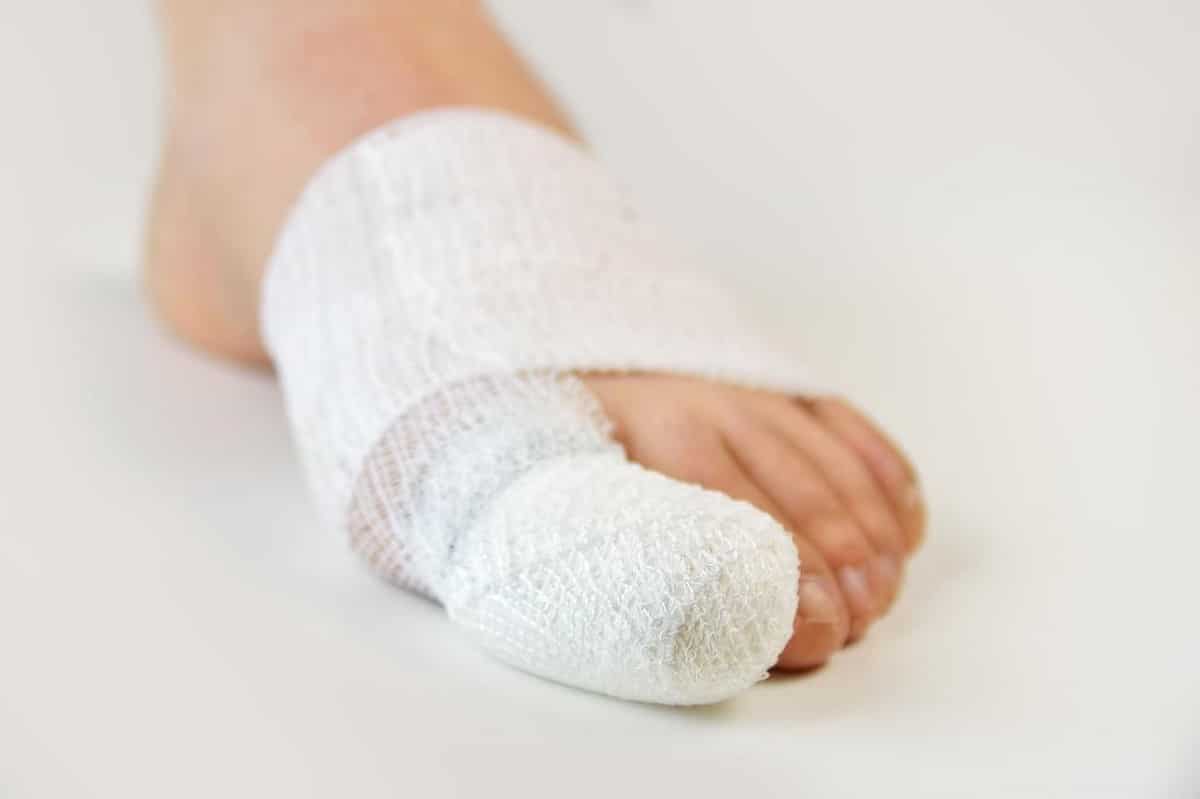
Broken toe: what can be done to relieve the pain?
How do you treat a broken toe? There are a few techniques you can use to relieve the pain, including :
- Installing ice packs on the toe for about 10 to 15 minutes to reduce swelling (repeat frequently throughout the day).
- Taking painkillers to soothe the pain.
- Opt for strapping: It involves securing the broken toe to the nearest toe using straps. This crisscrossing of straps, applied by a specialist (podiatrist or healthcare professional), will prevent a joint, an injured muscle or tendon to repeat the movement that damaged it, thereby accelerating healing for certain injuries.
- Wear special shoes: To protect the broken toe, wear special shoes, or even orthopedic shoes...
If you want an idea of the treatment you can expect for a broken toe, i.e., if the pain persists or if it is a fairly serious case:
- Fracture reduction Fracture reduction: to realign the toe bones in the event of abnormal movement, in some cases fracture reduction may be necessary.
Surgery : In the event of serious or complex fractures, you may require surgery to repair the damaged bone.
The doctor will drain the blood that has collected under the broken toenail if necessary.
How long does it take to heal a broken toe?
In general, the recovery of your broken toe will depend on the severity of the fracture, but most toe fractures heal within a few weeks to a few months. Generally, the toe will be realigned after at least 6 weeks.
We recommend that you follow your healthcare professional's recommendations to ensure optimal healing and avoid complications.
Even if it's just a toe, ignoring a broken toe can lead to immobility and chronic pain.
How to recognize a broken toe?
Several cases are possible:
Fracture
the foot thumb is most prone to fractures, which are most often the result of an impact to the toe or a heavy object falling on it. The bone of the hallux (big toe) is broken, and the patient feels a acute pain in the big toe, a swelling, a hematomaor even a sensitivity and tingling. Athletes (especially runners) are most at risk of fracturing their big toe.
Sprain
This occurs in certain sports where the hallux plays an important role (such as soccer, judo, field hockey, and basketball). This sprain particularly affects the big toe, at the metatarsophalangeal joint, following hyperextension. A pain throughout the toe, a swelling Where bruising are just some of the symptoms of this injury.
Hallux valgus (often called “bunion”)
This is a genetic conditionwhich manifests itself as bone deformation of the forefoot. The big toe gradually deviated from its axis and points toward the second toe, and is no longer parallel to the others, which changes the points of support and causes the other toes to twist. Bunions are more common in women (especially after menopause) and in people with neuromuscular or rheumatic diseases.
Particularly painful, it can, in time, lead to protrusion on the outside of the foot's thumb. In some cases, redness and the development of corns and calluses are also observed. This can be remedied by avoiding shoes that are likely to cause this deformity (e.g. shoes that are too tight, pointed or high-heeled).
Once your toe has recovered, you may be thinking of putting on comfortable shoes. In this case, check out our range of products. the best places to buy comfortable sneakers !









 English