Jeffrey Dahmer murdered 17 young men born between 1978 and 1991, mainly in the Wisconsin. He drugged them, killed them, and then committed rape, dismemberment, necrophilia, and cannibalism on the bodies.
Issued on July 22, 1991, he was sentenced to 16 life sentences before being beaten to death by a fellow inmate in November 1994. The series Dahmer, Monstre, available at netflix since September 21, 2022, recounts these crimes with a level of detail bordering on that of a documentary.

A hit movie
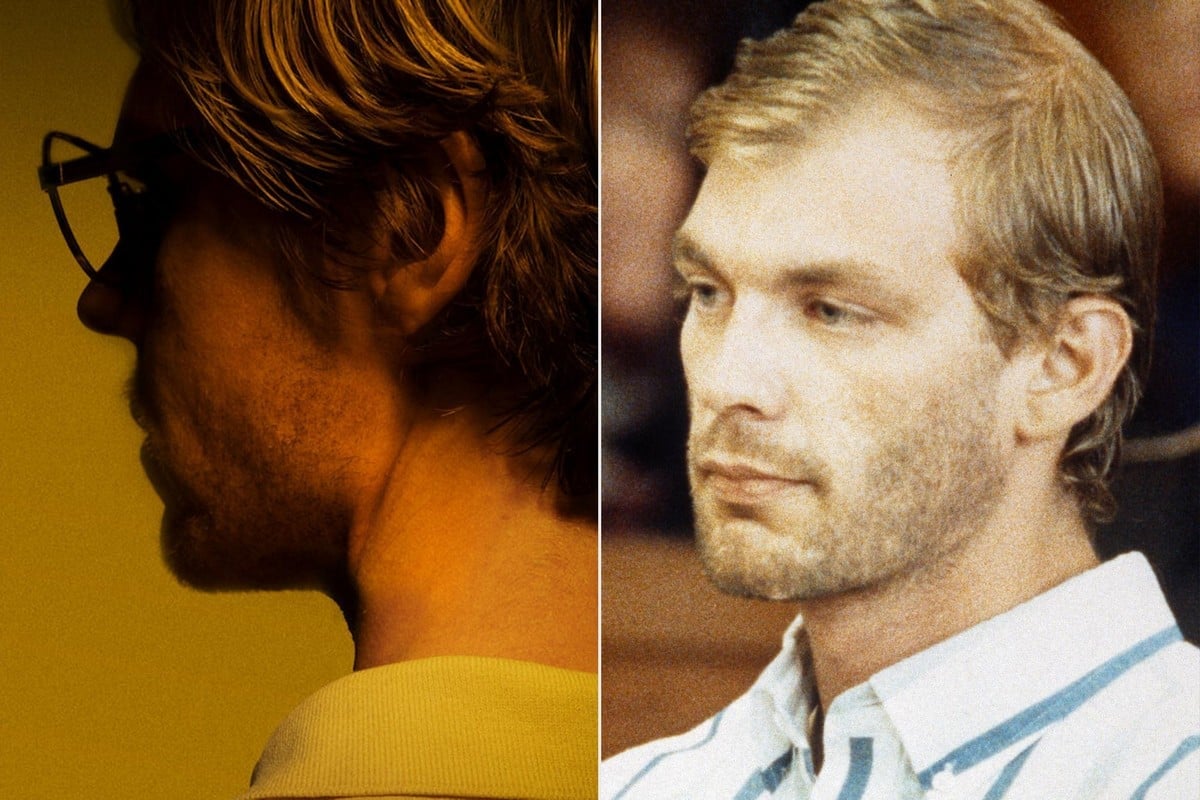
Series Dahmer, Monstre : L’histoire de Jeffrey Dahmer falls into the category of true crime : a work of fiction based on real events, without sugarcoating the horror.
Behind the project are Ryan Murphy, known for American Crime Story, and Ian Brennan, creator of Glee. The lead role is played by Evan Peters, previously seen in American Horror Story.
As soon as it premiered, the series quickly climbed to the top of Netflix's ratings. Its 10 episodes enable you to complete the entire journey of Dahmer, from his first crimes in Ohio to his arrest in Milwaukee. It's one of the best series on the platform. To discover the Best Netflix Moviesclick here!
Among the victims' loved ones, the reaction has been quite different. Several families have expressed their anger, particularly on Twitter, believing that this production sheds light on personal tragedies and proves to be deeply traumatic.
The 2002 film *Dahmer*
Before the Netflix series, a Dahmer movie had already been released in 2002. Directed by David Jacobson, this drama thriller tells the true story of the serial killer with Jeremy Renner in the lead role.
The cast also includes Bruce Davison in the role of Lionel Dahmer, the father, as well as Matt Newton and Dion Basco. The film was produced by DEJ Productions, with Larry Rattner in production.
The synopsis follows Dahmer through several flashbacks, alternating between his daily life in Milwaukee and his crimes. The film is available in VF and lasts about 101 minutes.
Its tone is more intimate than that of the Netflix series: while the series explores the social context and institutional failings, the film by Jacobson focuses on the psychology of the killer.
To place Dahmer within the context of films about serial killers, we can cite other notable works such as The Silence of the Lambs, Hannibal or movies about John Wayne Gacy and Ted Bundy. These productions share the same interest in criminal psychology and the horror of real-life crime stories.
Meticulously reconstructed crimes
The series shows how Dahmer targeted gay young men in particular, mainly men Black, Latino, and Asian.
He was a man racist and homophobic. Despite the complaint filed by his neighbor, the report from a boy who managed to escape him, and even a previous conviction, he continued to kill for years.
As the episodes unfold, the tension builds to a crescendo, revealing how his mind works and why he was able to evade justice for so long.
The vast majority of his crimes took place in Milwaukee, in the Wisconsin, even though his very first murder took place as far back as 1978, in Ohio.
If you want to take it even further, Netflix also offers the documentary Jeffrey Dahmer : autoportrait d’un tueur. The director Joe Berlinger there was access to unreleased audio recordings, including excerpts from conversations between Dahmer and his attorneys. A supplementary resource for those interested in Serial Killer Movies available on the platform.
The first episode
The journalist Anne E. Schwartz has investigated this case at length. His book Monster : The True Story of the Jeffrey Dahmer Murders In particular, it confirms that Glenda Cleveland, the neighbor, actually existed.
In reality, she lived in the’building across the street Dahmer's. His next-door neighbor, Pamela Bass, had also called the police several times, mainly because she was bothered by the foul odors coming from the neighboring apartment.
In the series, Cleveland’s character represents a combination of the two women, to simplify the plot. People close to Cleveland came across the victim, Konerak Sinthasomphone, as she left the apartment, naked and unable to speak.
Cleveland then called emergency services. Tracy Edwards is the man who managed to escape from Dahmer’s home, and it was thanks to him that the arrest took place. The scene was faithfully reconstructed based on his testimony, the evidence collected, and the photos taken by the police inside the apartment.
There is one small difference, however: Dahmer didn't have as many locks as shown in the series, but only two clasps. This ambiguity stems from inconsistencies in Edwards’ accounts during his interviews, which is hardly surprising given the shock he had just experienced. All the details of the final scene, however, are entirely true.
The discovery of human remains in the refrigerator—morbid photographs and torture devices—correspond to the documented events in Milwaukee.
The second episode
The second episode is undoubtedly the most memorable and shocking of the series. In it, we see officers trying to help a boy from 14 years old, naked, with a bloodied skull and unable to speak, who had just come out of Dahmer’s apartment. In reality, three police officers intervened: John Balcerzak, Joseph Gabrish and Rick Porubcan.
When they arrived, Dahmer claimed that the young man was his 19-year-old boyfriend and that he had been drinking too much. One of the police officers did mention a strange odor in the apartment, but they did not conduct a search.
As they were leaving, they exchanged homophobic jokes on the police radio. The phone conversation between Glenda and Balcerzak actually took place and is reproduced almost word for word in the series.
The only discrepancy with reality concerns the officers' decorations. In fact, they were not honored by their superiors after Dahmer's arrest.
This scene was invented to draw a disturbing parallel with the Recognition Given to Glenda Cleveland by the City of Milwaukee, which did in fact take place.









 English