Are you looking for the complete list of Bear Pokémon ? Here are the main ones in the franchise: Teddiursa, Ursaring, Ursaluna, Cubchoo, Beartic, Stufful, Bewear, Pancham, Pangoro, Kubfu and its evolution Shifours (Urshifu). In this article, we provide a list that covers the games in the main series and Pokémon GO, including each Pokémon's type, evolution, and characteristics.
In fact, almost all of these bear-like Pokémon are available in the mobile game. You’ll also find the answer to a frequently asked question below: Which bear-like Pokémon is the largest? Let’s take a look at the list of bear-like Pokémon along with their respective images.
Things to remember :
- This article lists bear-themed Pokémon and details their types, evolution stages, and abilities, such as Teddiursa which becomes Ursaring at level 30, then Ursaluna in Légendes Pokémon : Arceus.
- It highlights the unique characteristics of each bear-type Pokémon, from Stufful and Bewear at Pancham and Pangoro, as well as Kubfu and its two fighting styles (Thousand Fists Style and Final Fist Style), and their appearance in Pokémon GO.
- The article finally answers the question of which is the biggest bear-like Pokémon and invites you to share your choice in the comments.
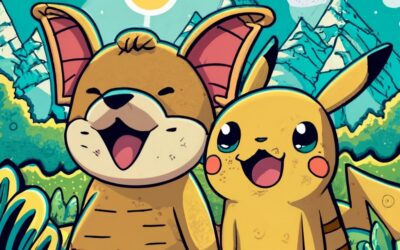
1. Large Bear: Kubfu
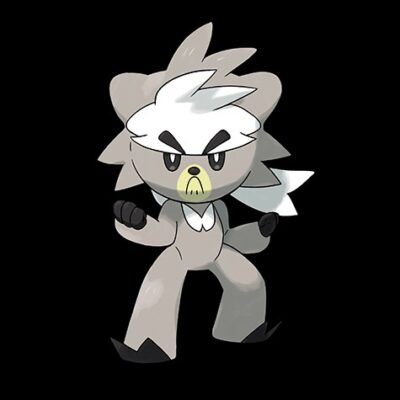
Kubfu, also known as Wushours In the French version, he is a straight-backed bear cub with a grumpy expression, added to Generation 8 via the expansion Isle of Armor from Pokémon Sword and Shield. It’s a pure Fighting-type Pokémon whose appearance is reminiscent of the combat gear worn when practicing Kung Fu. It takes you on a whimsical adventure around the island and trusts only those who have earned its respect.
The progression depends on which tower you choose. If you choose the Tower of Darkness, Wushours bECOMES Shifours: Final Punch Style (Fighting and Dark types), a fast fighter who relies on a single devastating blow. If you prefer the Water Tower, he transforms into Shifours Thousand Fists Style (Fighting and Water types), specializing in rapid combo attacks. Each form has its own signature ability, ideal for the highest levels of competitive play.
2. Urshifu
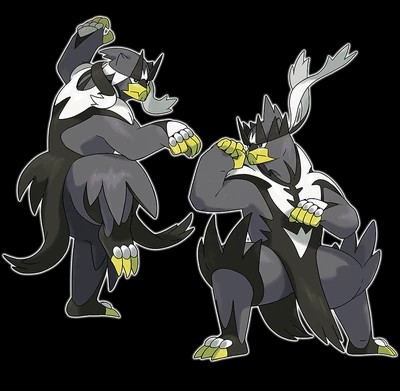
After a few practice sessions, Kubfu evolves in Urshifu, whose French name is Shifours (National Pokédex No. 892). This evolution first appeared in Generation 8, in the expansion Isle of Armor of Pokémon Sword and Shield : Without this DLC, you can't find it or level it up.
When it evolves, the scroll you show it determines its battle style and dual type. There are therefore two forms:
- Shifours: Final Punch Style (Single Strike): Fighting/Dark type. Its signature ability, Tour des Ténèbres, deals a guaranteed critical hit.
- Shifours Style: A Thousand Fists (Rapid Strike): Fighting/Water type. Its signature move, Tour de l’Eau, strikes twice and always hits the mark.
With its kung fu-inspired punches, powerful moves, and blazing speed, this bear-like Pokémon is one of the most formidable fighters in the franchise. For detailed stats and the moves it learns by level, check out its entry in the official Pokédex.
3. Stufful
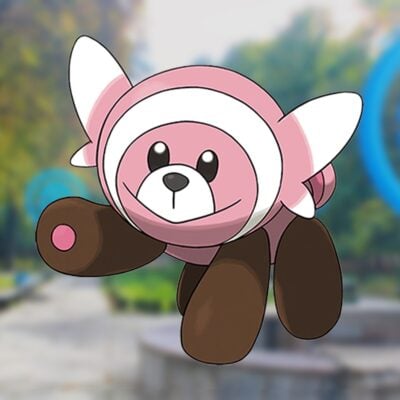
This cute little Stufful is extremely strong for its small size. It likes to be alone and doesn’t appreciate the company of strangers: if you touch it carelessly, its paws can strike with unexpected force. It is a Normal/Fighting-type Pokémon native to the Alola region, introduced in Generation 7. This pink bear-like Pokémon is called in French Nounourson. Its adorable appearance hides the physique of a fighter—a contrast shared by few Pokémon of this type.
4. Bewear
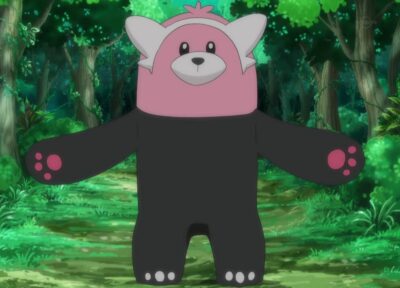
Bewear is the iconic bear Pokémon of the region of’Alola, introduced in the 7th generation. It is the evolution of Stufful, and it can be found in the island's lush forests, where it often moves around on its hind legs.
Behind its cute appearance lies a dangerous Pokémon: it is so strong that even a simple hug from its paws can break bones. Bewear It remains an excellent team choice, however, thanks to its dual Normal and Fighting types, which give it powerful moves and a good balance between strength and defense.
5. Pancham the Bear
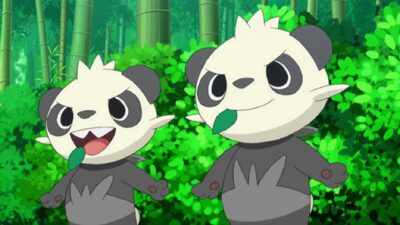
Let's just say it: it wouldn't be a collection of bears without a panda: Pancham is here to take on this corner. It’s a little bear in the classic Pokémon style, native to the Kalos region (Generation 6). It can be found deep in the jungles of Kalos, and even though it’s mainly inspired by a panda cub, it’s often included in lists of bear-like Pokémon.
As for combat, Pancham is a Fighting-type. Despite his small size, he makes up for it with his punches and feisty personality. When he is young, he admires the Pangoro and tries to mimic their movements in nature. Its evolution is remarkable: it becomes Pangoro, a dual-type Fighting and Dark Pokémon that is larger, heavier, and capable of powerful close-range attacks.
6. Pangoro
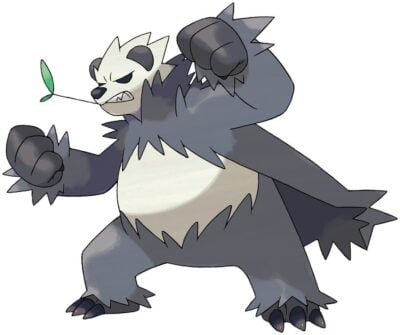
Pangoro is the evolution of Pancham, both of which were introduced in Generation 6 in the heart of the Kalos jungles. It is modeled more after the giant panda than the brown bear, but its massive, bipedal build often earns it a spot on this list.
Its Combat and Dark dual types give it powerful moves and real strength in close combat. What makes this evolution unique is: Pancham does not change into Pangoro only if a Dark-type Pokémon is on your team when you level up.
7. Cubchoo Bear
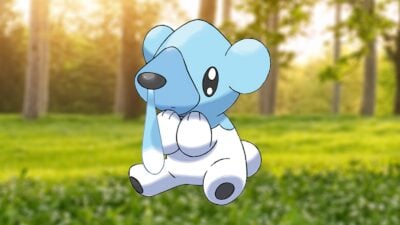
Polar bears are also part of the franchise Pokémon. Cubchoo is a little bear from Ice type, introduced in the fifth generation with the games Pokémon Noir et Blanc. It traverses the icy biomes of most of the games that followed this generation.
He has a nose that drips with ice, and his frosty snot is the key to his movements. This little bear uses it as raw material and wipes it on people he doesn’t like. The more his nose runs, the better he feels: a copious amount of snot signals a Cubchoo in good health. He is growing up in Beartic, a much larger polar bear that retains the Ice type.
8. Beartic Bear
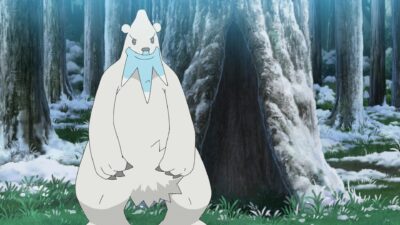
The Formidable Beartic is a straight Ice-type bear, inspired by a polar bear. It evolves from the tiny Cubchoo, a little bear with a runny nose. Both appeared in Generation 5, namely the games Pokémon Black and White.
As it grows, the bear cub grows the icy beard that is characteristic of its final form. It is found naturally in the icy biomes of most recent games. In battle, Beartic It relies on its physical strength and can learn a few Water- and Normal-type moves in addition to its Ice-type attacks, which expands its options. Its speed remains its weak point, but its raw power makes it a reliable partner.
9. Teddiursa Bear
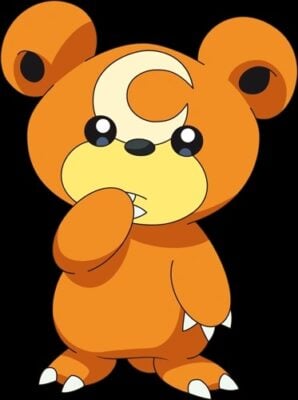
The cute little bear-like Pokémon Teddiursa is of type Normal and is listed as number 216 in the Pokédex. First appearing in the second generation, it is likely modeled after the moon or a solar bear: the crescent-shaped mark on its head is a reference to the constellation Ursa Major, hence its lunar appearance.
The Teddiursa always keep their paws in front of their faces because they are covered with honey which they constantly lick. They store the honey they collect from insect Pokémon, making them both greedy and hard to track in the wild. If you play games like Mystery Gift Codes for Pokémon Brilliant Diamond and Shining Pearl, be sure to check its availability.
As for combat and evolution, Teddiursa He relies on solid offense but has modest speed. He plays in Ursaring at level 30, and then a final evolution is possible to Ursaluna thanks to a Peat Stone used under a full moon in the game *Pokémon Legends: Arceus*. This little bear remains one of the cutest Pokémon in the franchise.
10. Ursaring
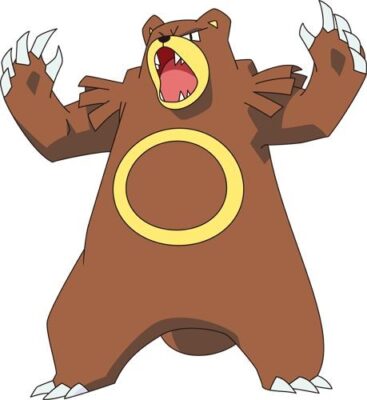
Ursaring is the evolution of Teddiursa Starting at level 30. It is a Pokémon of type Normal, listed as number 217 in the Pokédex and introduced in the Johto region starting in Generation II. Its profile describes it as a large brown bear standing on its hind legs, with a ring of light-colored fur on its belly that gives it its name.
Where Teddiursa is still an adorable little bear, Ursaring shows a much more hot-tempered nature. Once it spots an opponent, it launches into a relentless pursuit that ends in a tough battle. Its strength and high Attack stat make it a formidable Normal-type in close combat, capable of taking hits and then striking back hard.
Good to know when using this with your team: in Légendes Pokémon : Arceus, Ursaring in turn evolves into Ursaluna thanks to a Peat Stone used under a full moon. So don't let its Normal type discourage you: it's one of the best offensive bases of its generation.
11. Ursaluna Bear
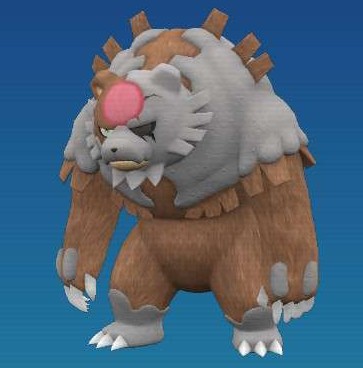
He looks a little clumsy, but he's excellent Pokemon combat units to be deployed as a team. Ursaluna is a Ground and Normal-type Pokémon; this dual type gives it good attacking power in close combat. It was introduced in Pokémon Légendes Arceus (8th generation) and is native to the ancient region of Hisui. Its name, likely inspired by a moon, comes from the fact that Ursaring evolves into Ursaluna only under a full moon, using a Peat Stone. This final evolution is also available in Pokémon Go. Note for advanced players: an alternative form of moonblood exists in Écarlate and Violet.
Ronflex

Despite weighing half a metric ton, Ronflex is a very docile Normal-type Pokémon that only wakes up when it needs to eat or when someone plays the Poké Flute. At first glance, it bears no obvious resemblance to a bear. No official source cites the bear as a direct inspiration, but its design is widely compared to various animals, including bears and even cats, hence its somewhat hybrid-looking head. It appears on this list for that reason.
Munchlax
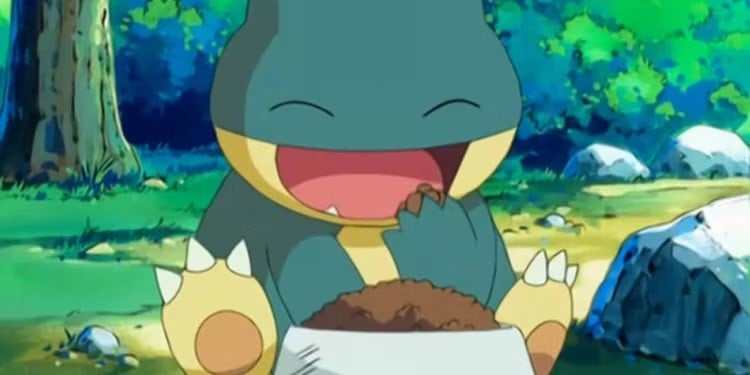
A small and adorable bear-like Pokémon, Munchlax is the pre-evolution of Ronflex, introduced in Generation 4. Although very popular with fans, it isn't a very active fighter, but players have the option to evolve it into a defensive tank Ronflex once a sufficient friendship level has been reached.
Which Pokémon bear is the biggest in size?
There are many bear-like Pokémon, varying in both size and type. Among the most imposing are, Ursaluna and Beartic regularly top the rankings. To choose the right one, consider its type, abilities, and role on your team. For detailed information (basic stats, attacks, location), you can cross-reference this data with an official Pokédex or Bulbapedia.








 English