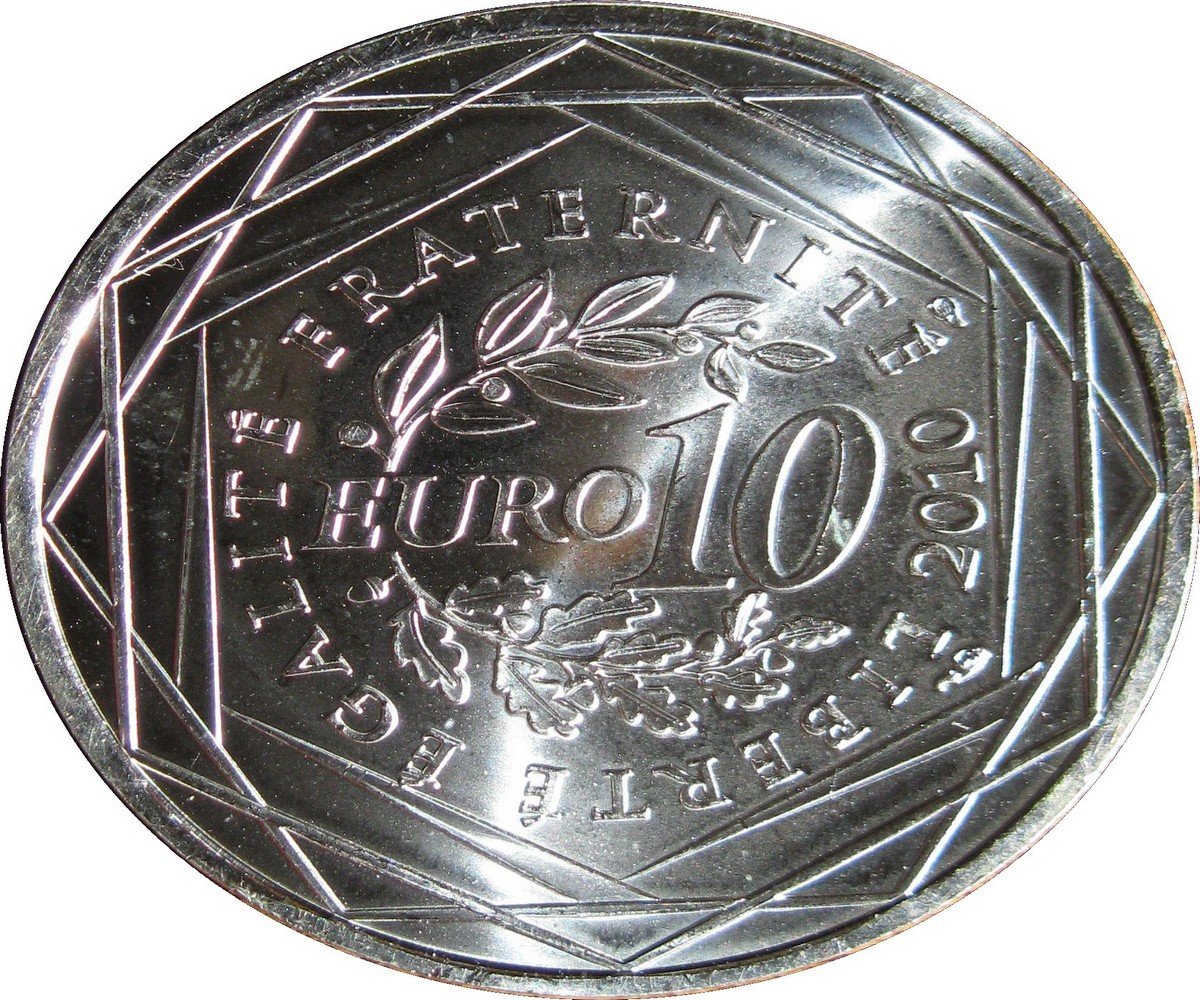
Yes, paying with a €10 silver coin is legal in France These commemorative coins are legal tender in the same way as banknotes. Refusing to accept a coin as legal tender can result in a €150 fine (article R.642-3 of the French Penal Code).
But in practice, it's more complicated: many shops refuse to accept them out of ignorance, some cash registers don't recognize them, and even your bank can be difficult when it comes to making deposits.
We explain your real remedies below.
What the law says about paying with a €10 silver coin
The answer is «yes», you can use them as a means of payment.
To note : a salary may only be paid in cash up to €1,500 net per month (article L.3241-1 of the French Labor Code).
Beyond that, bank transfer or cheque are mandatory. This means that the optician's salary or a warehouse worker or other occupation starting at €1,750 per month is not affected.
It should be noted that, according to the law (article R.642.3 of the penal code), the refusal of these pieces of currency or some banknotes legal tender in France is punishable by a fine offine of up to €150.
💡 This rule applies in mainland France and its overseas territories. In other euro zone countries, equivalent rules exist but are governed by their national law.
What should you do if someone refuses to accept your €10 silver coin?
Legally, no one has the right to refuse a coin that is legal tender in France. In practice, this happens regularly, because the cash registers don't recognize the coin or the merchant doesn't know what it is.
Here are the remedies that really work, from the simplest to the most profitable.
1. La Poste: the most accessible solution
La Poste generally accepts €10 silver coins, Whether for a service payment or an account deposit.
- 💡 If an office refuses, you can file a claim on 3631 or directly on the official La Poste website.
- 👌 Advantage : recovery of 100 % of the face value.
⚠️ Downside: some offices still refuse, so it's best to test before taking 20 coins with you.
2. Banque de France: the official (but limited) channel
The Banque de France can take back your coins at face value and credit your account. This is the most “official” option.
⚠️ Important note: the only counter that does this without a hitch is at 39 rue Croix des Petits Champs, 75001 Paris. Several holders have reported refusals at regional branches since 2018. If you don't live in Paris, this is rarely the best option.
3. Your bank: worth a try, but no guarantee
You can ask your advisor to deposit the coin in your account. Many banks (LCL, Crédit Mutuel, Banque Postale in branches) refuse on the grounds that their machines do not recognize the coin, or that cash carriers reject them.
📌 Tip: if you are refused, ask in writing. A bank is legally obliged to accept legal tender for a deposit on an account opened with it.
4. Resale: often the most profitable option
A €10 silver coin from the Regions series (2010-2012) sells for an average of between €12 and €15 on specialized platforms:
- Delcampe and eBay: auctions, ideal for the most sought-after models.
- Catawiki: numismatic thematic auctions.
- Numismatic stores: immediate sale, but often at 60-70 % of face value (so €6-7 for a €10 coin). Avoid except in emergencies.
🧐 Advice : Before reselling, check the year and region of your piece. Some low-draught models sell for well over €15.
The history of the €10 silver coin
From the June 25, 2012, The Monnaie de Paris has launched a new series of €10 coins designed for both collectors and the general public.
In total, 3 million parts were hit, divided into 27 models corresponding to the 22 French regions (with a few variations). Each coin bears a regional symbol on the reverse, making it both a collector's item and legal tender.
📌 Good to know: the composition is 333 ‰ of pure silver (i.e. one third silver in 17 grams of metal). This explains why the intrinsic value of the metal is lower than the face value. You won't make a fortune by melting it down, but it remains an excellent means of payment (or collection).
💡 If you own more than one piece in this series, keep them in their original packaging A scratched or damaged piece immediately loses its value on the collector's market.
FAQs
Does a retailer have the right to refuse my €10 coin?
Nope. According to the’article R.642-3 of the Criminal Code, Refusing to accept a coin or banknote that is legal tender in France is punishable by a fine of up to €150. In practice, many people ignore this rule.
How much is a €10 silver coin really worth today?
On the collectors' market, it generally sells for between €12 and €15. Low-run models or those in perfect condition may exceed this price. The value of the metal alone (333 ‰ of silver) is less than the face value.
Can I pay my taxes with €10 silver coins?
The Treasury is obliged to accept legal tender cash up to 300 € by payment (article L.112-6 of the French Monetary and Financial Code). Beyond that, another means of payment is required.
My bank refuses to take my coins. What should I do?
Ask for a written refusal. Banking establishments are normally required to accept legal tender on deposit, and a formal refusal gives you recourse to the banking ombudsman or the ACPR.
Is it necessary to clean a €10 coin before reselling it?
No, not at all. Cleaning damages the surface and reduces the value. Keep the piece in its original packaging or in a protective case.
There are rules governing the use of cash. Are you in the habit of paying in cash and using the biggest ticket in euros?







 English
these coins are worse than the panzi pyramid! it's a real organized scam! even the worst crooks wouldn't dare to do that!
What exactly makes you say that?
I think you are misinformed, the Banque de France does not take back these coins, but much worse
again, an official MDP distributor takes them back with a commission of 20 to 30%, i.e. between 7 and
8 € the part…. isn't that stealing? ? LAMENTABLE!
Hi, no according to the law traders must take them back :).
As long as it is in circulation no problem, maybe the Banque de France takes it cheaper but it will still be usable for 10€.