Let's find out how the «Friend solar system», also known as the solar system of friends on Snapchat. This is one of the flagship features of the Snapchat+ subscription.
Here is the complete order of 8 planets in the Snapchat solar system, from the nearest to the farthest away:
| 🎯 Rank | 🪐 Planet | ✨ Appearance | ❤ Hearts / stars | 📑 What it means |
|---|---|---|---|---|
| 1 | 🪐 Mercury | Red | Red hearts | Your #1 best friend on Snap: you exchange the most Snaps and chats with them. |
| 2 | 🌟 Venus | Sandy / beige | Pink, yellow and blue hearts | Your 2e closest friend. Frequent interaction. |
| 3 | 🌍 Earth | Blue with green continents, a moon | Red hearts | 3e closest friend. Regular exchanges of Snaps and chats. |
| 4 | 🚀 Mars | Red | Blue and violet hearts | 4e closest friend. Sustained interaction, but less intense than the top 3. |
| 5 | 🌌 Jupiter | Orange/red-orange stripes (no rings) | No hearts, just stars | 5e friend. You exchange information from time to time, without being ultra regular. |
| 6 | 💫 Saturn | Yellow with rings | No hearts, just stars | 6e friend. Present in your circle, but exchanges become rarer. |
| 7 | 🌠 Uranus | Green-blue | No hearts, just stars | 7e friend. Occasional interactions only. |
| 8 | 🌊 Neptune | Dark blue | No hearts, just stars | 8e and last friend in the solar system. You exchange very little with him. |
⚠ Before you send it to all your friends for comparison, there are 3 things you absolutely must know:
📌 Things to know before you panic or take offense
- Planets are calculated from your point of view only. You can be someone's Mercury Snap without them being yours (and vice versa).
- The ranking is based on Snaps + chats exchanged, not on your overall history. It can therefore change from one day to the next.
- To get your own solar system, you need Snapchat+.

Mercury: 1st planet

In the Snap solar system, Mercury is closest to the sun. This is the person with whom you have the most interaction, and who has the most interaction with you in return. It's your number 1 on the social network. You can recognize it by its red color and red hearts.
Important The ranking is from your point of view. If Lea is your Mercury Snap planet, that doesn't mean you're hers. Everyone has their own ranking, based on their exchanges.
Venus: 2nd planet

Venus comes in a close second. Sandy beige in color, it features pink, yellow and blue hearts.
Earth: 3rd planet
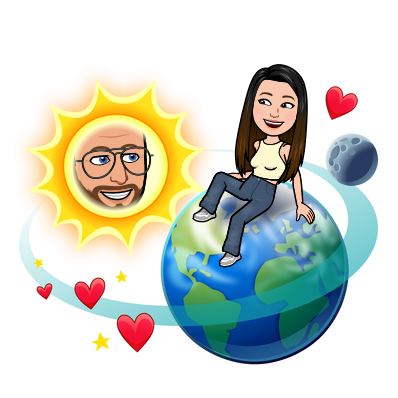
The Earth is blue, with green continents and a moon. There are red hearts. This is your 3ᵉ closest friend on Snap.
It corresponds to your third position: a person who often sends you cats and regularly shares footage with you.
Mars: 4th planet

Mars is red, with blue and violet hearts. Mars can be recognized by its blue and violet hearts (Mercury has red hearts) and its position further from the Sun. In fourth position, it designates the person who occupies this position in your list, with exchanges that are still sustained but a little less intense than your top 3.
Jupiter: 5th planet

Jupiter, fifth planet of your Snap Solar System, is orange-red with stripes (not rings, unlike Saturn). No hearts around it, but stars. You share content from time to time and interact occasionally.
Saturn: 6th planet

Saturn is yellow and surrounded by rings, without hearts but with stars. It is the sixth planet of your solar system of friends on Snapchat.
Uranus: 7th planet
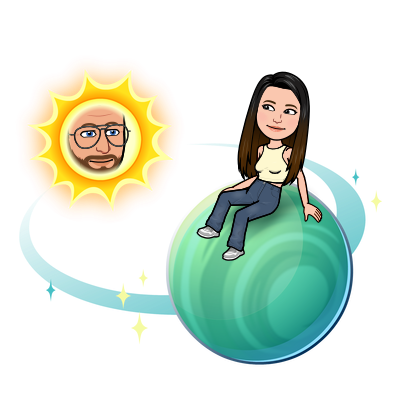
Uranus occupies the seventh position. You exchange less with it than with the previous six, but it remains in your top 8. Green-blue with stars.
Neptune: 8th planet

Neptune brings up the rear, in eighth and last position. Please note: this doesn't mean that this person is «far away» in absolute terms, just that he or she is last in your top 8.
You trade less with it than with the previous seven, but it's still part of your inner circle. This planet is dark blue, without hearts but with stars.
How can I see the planets on Snapchat?
With Snapchat Plus, a best friends« badge» surrounded by a golden ring appears on a person's profile. The eight contacts with whom you share the most Snaps and chats form this circle of favorites.

Pressing it reveals the position you visit at home, each planet corresponding to a different rank in their ranking. So you can see the rank of your contacts at home, and your own rank at theirs.

FAQs
How can I see other people's best Snap friends?
You would like to consult the complete contact list someone else's favorites? Unfortunately, the application doesn't allow this, even with Snap+.
You can only see the your place at that person's home, by pressing the «Best Friends» icon on their profile (provided they have Snap+ and you're in their top 8). Note that you must also have Snap+.
⚠ beware sites or applications that claim to reveal a stranger's bookmarks: these are scams. They don't work, and entering your login details can get your account hacked or banned.
Why have my Snapchat planets changed?
This is completely normal and it happens to everyone. The solar system isn't set in stone: it's constantly recalculating based on your recent exchanges. Here are the 3 main reasons why your ranking changed overnight:
- ✅ Snapchat is based on your recent interactions (Snaps + chats), not on your overall history. If you've talked less to your «Mercury» in recent days and more to your «Venus», they may reverse.
- ✅ The ranking is updated regularly, sometimes several times a week. So you can see the planets moving from one day to the next, even without doing anything special.
- ✅ Group Snaps and stories don't weigh the same than direct Snaps. If you replace 1-to-1 conversations with mass mailings, your ranking may move.
📌 To remember If a person «disappears» completely from your solar system, it's because they're no longer in your top 8. To bring them back, simply resume regular exchanges with them (direct Snaps + chats over several days).
Can my friend see which planet I'm on at home?
Yes. As soon as your friend Snap+ subscriber, He can open his profile and press the «Best friends» icon, then see the rank you occupy. If you're his #1 contact, he knows. If you're last in his top 8, he knows that too.
⚠ Warning: this is not not symmetrical. You can be someone's number 1 without them being yours, and vice versa. This creates a lot of drama, but it's purely mathematical: everyone has their own ranking, based on their own exchanges.
Why can't I see the badge?
You've subscribed to Snap+ but the golden ring icon does not appear on a contact's profile? Two main reasons:
- This person is not a Snap+ subscriber The pictogram is only displayed if it is itself.
- You're not in his top 8 only his eight favorites are listed.
If you see the icon without the gold ring, you are «mutual best friends» without Snap+, which has nothing to do with the global ranking.
And if you want to understand how Snapchat calculates «best friends» in more detail, we have a dedicated article: how best friends work on Snapchat.
In short, the more close to the sun, the closer she is to you, according to your recent exchanges.
Let's take a step back: your ranking with someone depends on HIS habits, not a judgment on your friendship. Last but not least, Snapchat is forbidden to children under 13.








 English
Thank you very much for your article. I finally know what a best friend snap planet is.
no problem 😉
Glad my site helps!
Thanks for the Snapchat Planets info! I'm curious, is there any way to access the Snapchat Planet Order without needing Snapchat Plus?
Hi Myra! Actually, you can see another person's Snapchat planets without
have Snapchat+ yourself, as long as SHE is a subscriber: just click on her
Best friends« badge (the one with the gold ring) on your friendship profile
and you'll see where you stand in its solar system 🪐
What Snapchat+ is all about is making your OWN solar system visible to others.
I hope this helps!
I was just looking for information on snap systeme solaire and your guide is perfect.
Thank you 🙂