



























Tinder is primarily aimed at Ages 18–35. Men account for approximately 75 % users, compared with 25 % women.
Here's what the data really says about this dating app.
Tinder's Target Audience in France
In France, Tinder is primarily aimed at Ages 18–35, and more specifically the Ages 25–34, which account for approximately 32 % users. The 18-24 years old are right behind them with about 21 %.
The average age The user base on the platform is young, but less teenage than people often imagine.
This audience is concentrated mainly in the major cities and student areas, where the density of single people online is highest. Young professionals and urban students make up the bulk of active members in France.
Tinder In fact, it regularly ranks among the most downloaded dating apps in the country, ahead of apps such as Bumble Where Hinge.
The gender breakdown remains highly skewed: 75 % men for only 25 % women. This imbalance directly affects members' experience, particularly the quality of the matches, especially among men.
Compared to its competitors in the online dating market, the target audience stands out quite clearly. Bumble shows a more balanced distribution (approximately 60 % men, 40 % women), and Hinge appeals more to people looking for long-term relationships, particularly those in the age group Ages 25–34.
Tinder, on the other hand, focuses on volume and spontaneity. It is this marketing strategy that largely explains its global success.
A mix of casual hookups and serious relationships
Tinder was launched in September 2012. He didn't invent online dating: Match.com has existed since 1995 and Meetic since the early 2000.
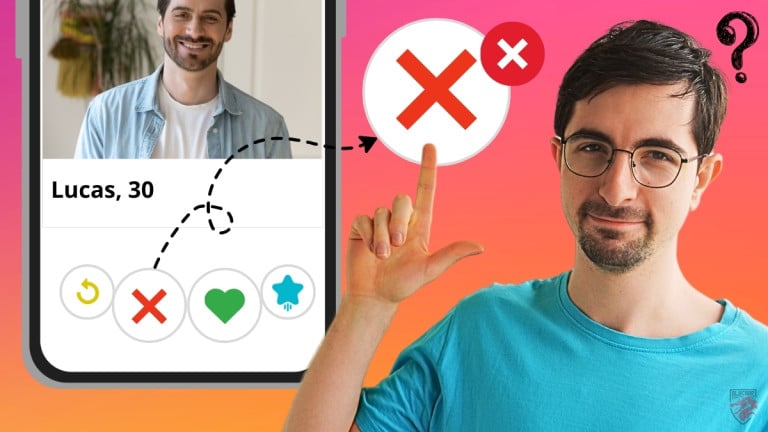
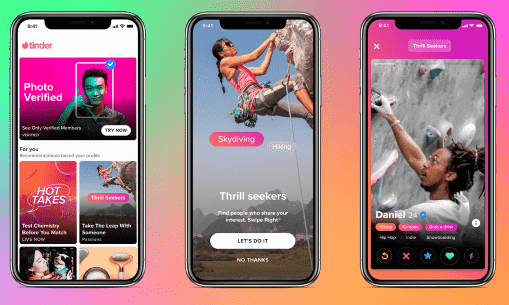
What he popularized was the swipe : Swipe right to like a profile, swipe left to skip it. This simple gesture has won over millions of people and made the app a success.
Swiping has become second nature to millions of young users around the world. In the dating app market, this feature represented a true departure from the detailed profiles found on traditional dating sites.
Tinder has a reputation for casual hookups, but its user base has evolved significantly. Many members are now looking for a serious relationship, not just a one-night stand.
This dual image is part of its marketing strategy: to appeal to a broad audience, from young people who want to have fun to those hoping to find love.
Personal data and profile privacy remain a sensitive issue, which the app addresses in its legal notices.
A profitable application
The business model of Tinder is based on the freemium. The free version lets you meet people, but it limits the number of swipes per day and restricts certain features. This is what drives some members toward a paid subscription.
With approximately 9.8 million paying subscribers over 75 million monthly active users, Tinder is the most profitable dating app in its market. Its commercial success makes it the cornerstone of the group Match Group, which also owns other popular dating apps.
Tinder's Paid Features
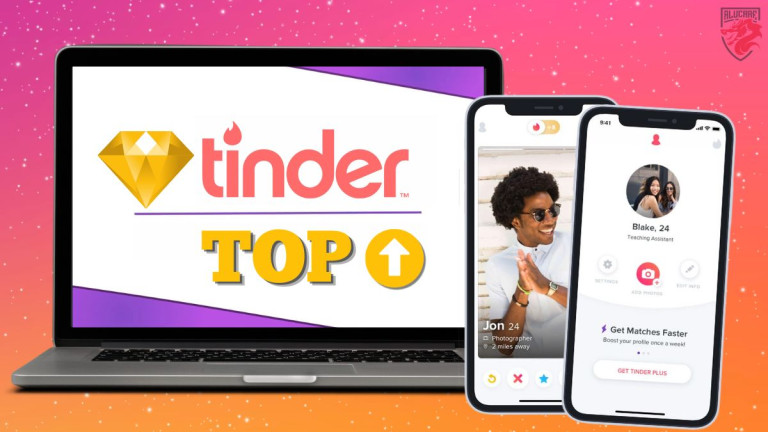
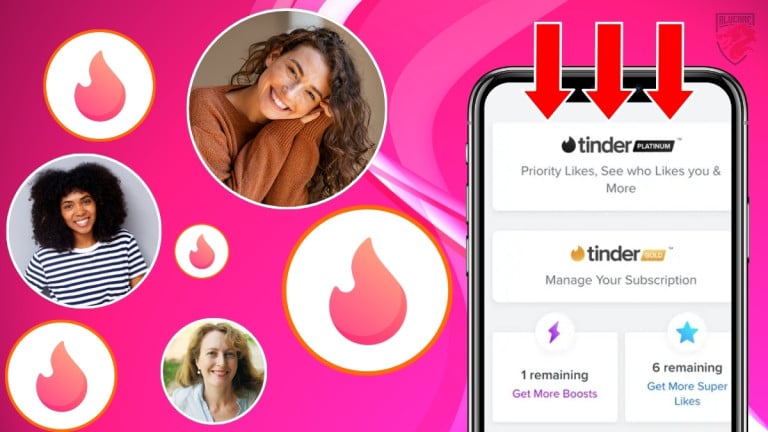
The paid service from Tinder has expanded over time. Tinder More, the original tier, was joined by Tinder Gold (2017) and then Tinder Platinum (2020). These higher tiers add features such as
- See who's already liked you before you swipe; ;
- of the unlimited likes and Featured Profiles ;
- the ability to go back to a profile you skipped over too quickly; ;
- pass on your priority message from the person in question.
The price varies depending on your age and your country. Historically, users of under 30 years old paid less than older people, a practice that sparked debate. The monthly rate therefore depends mainly on your geographic area and the plan you choose.
If you want to compare Tinder For other online dating options, check out our article on the top 5 alternatives to Tinder.


![Men's profiles on the dating app [NOTRANSLATE]Tinder[/NOTRANSLATE].](https://www.alucare.fr/wp-content/uploads/2023/04/www.alucare.fr-est-ce-que-tinder-marche-pour-les-hommes-Est-ce-que-Tinder-marche-pour-les-hommes--768x432.jpg)












 FR
FR  RU
RU  EN
EN  ES
ES  IT
IT  DE
DE  ZH
ZH  PT
PT  ID
ID  JA
JA  DA
DA