L'memory saver of Google Chrome unload your tabs in the background of the RAM, then automatically reloads them when you return to them. Your browser uses fewer resources, but some pages reload at the wrong time—for example, when you're working on a form or an online tool.
You can disable it completely, or better yet, exclude sites on a case-by-case basis to keep the benefits for the rest of your navigation.
Tutorial on how to disable memory saver:
Here's how to proceed in the Performance Settings of Chrome, step by step:
- Open the Performance Settings of Google Chrome by copying and pasting the URL chrome://settings/performance in your address bar.
- Under Memory Saver, uncheck the option to disable it on all sites.
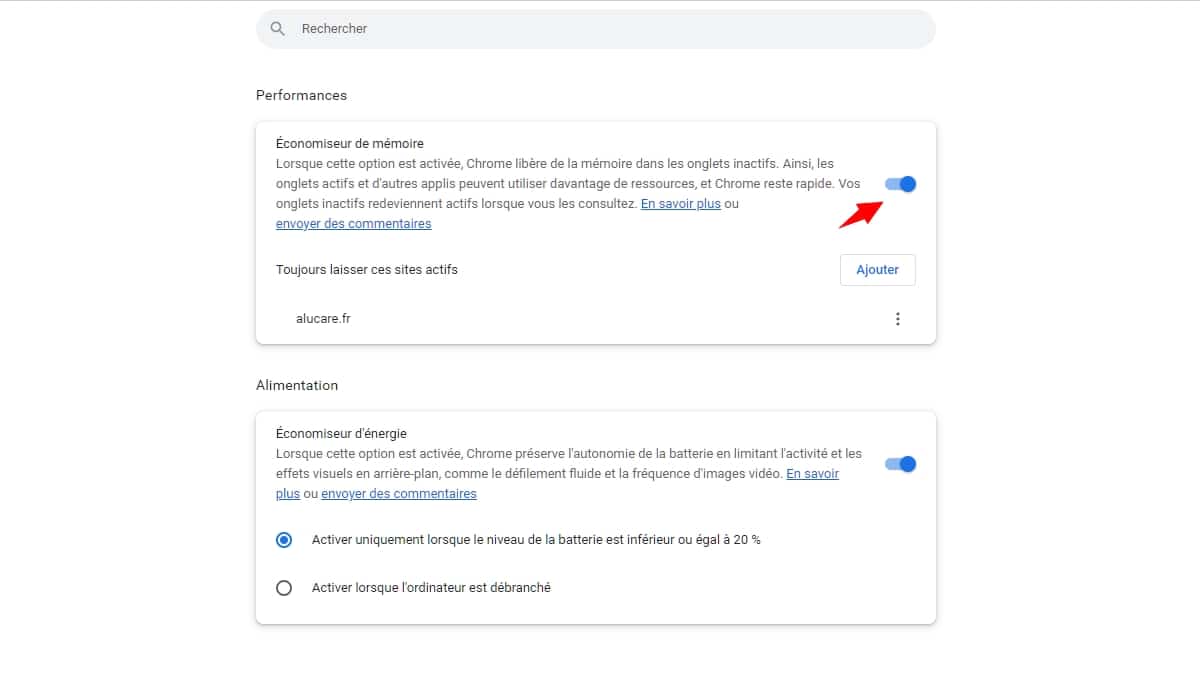
Instead of cutting everything, click on Add to exclude only the sites that should not reload.
To exclude a site, simply enter its address (for example notion.so), then click "Submit." The domain only automatically covers all of its subdomains. These pages will remain active in the background and will never be unloaded.
In those same settings, you'll also find the’energy saver of Google Chrome. It reduces background activity to preserve the battery from your laptop during your navigation long.
How do I re-enable the memory saver?
Changed your mind? Go back and select the option again. As soon as it's selected, Google Chrome frees one from RAM on the inactive tabs, which improves the performance of your active tabs and preserves the battery by reducing the browser's overall load.
Please note : This feature was introduced with the update Chrome 110, in February 2023. The’energy saver was added to the same mode performance management during the same period.
To learn more, check out:








 English