the CFA franc is made of France, at Chamalières (Puy-de-Dôme), in the’Bank of France Printing Office, and has been doing so since 1945.
But why a African currency Is it still shaped by the former colonial power? That's what we'll explore together in this article!
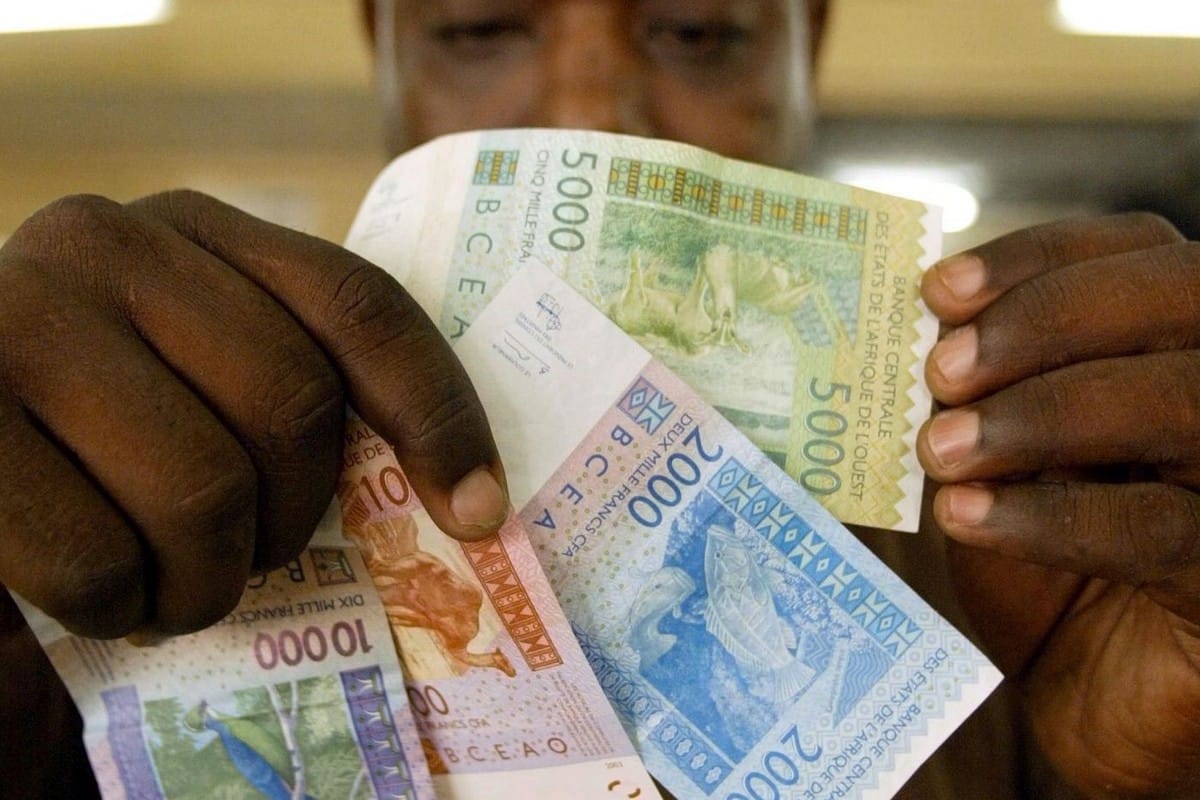
Who prints the CFA franc, and where?
This is the Banque de France at Chamalières which is responsible for printing CFA francs. This currency printing facility has been located there since 1921; the site was chosen at the time because of its distance from the borders.
African central banks are providing CFA franc banknotes to the Bank of France through a contract with a service provider.
The heads of state Countries in the «Franc Zone» may decide, by mutual agreement, to change their manufacturing location.
- In fact, each country can to leave freely the «Franc Zone,» either temporarily or permanently. Several countries have already done so permanently, such as Mauritania, Madagascar, and Guinea.
- The operation of the zone is based on monetary cooperation agreements between France and the regional unions, which replaced the former bilateral agreements signed on a country-by-country basis starting in 1962.
While many African countries have their banknotes printed abroad, this is most often because lack of a currency printing facility dedicated to this cause in the country.
This is common in Africa : Most countries use a few major foreign printing companies, based on the results of competitive bids, and the country where the banknotes are printed may vary from one series to another.
Among the most sought-after printers are:
- De La Rue (United Kingdom),
- Giesecke+Devrient (Germany),
- Oberthur Fiduciaire (France),
- Crane (Sweden/United States)
Thus, the Ethiopian birr has been printed on both the United Kingdom that in Germany, the Botswana pula to United Kingdom then in France, and the dollar Liberian in Sweden.
Which countries use the CFA franc?
The CFA franc was created on December 26, 1945, shortly after World War II, on the day France ratified the Bretton Woods Agreement.
Today, 14 African countries use the CFA franc, which is divided into two separate currencies issued by two central banks:
- UEMOA Region (West Africa):
Benin, Burkina Faso, Côte d’Ivoire, Guinea-Bissau, Mali, Niger, Senegal, and Togo.
These eight member countries make up the West African Economic and Monetary Union.
The currency is the XOF, issued by the BCEAO, the Central Bank of West African States.
- CEMAC region (Central Africa):
Cameroon, Congo, Gabon, Equatorial Guinea, the Central African Republic, and Chad.
These member countries make up the Central African Economic and Monetary Community.
The currency is the XAF, issued by the BEAC, the Bank of Central African States.
In addition, the Comoros uses the Comorian franc (KMF): a currency pegged to the euro but distinct from the CFA franc, issued by the Central Bank of the Comoros.
Supporters of the CFA franc point to the monetary stability provided by the fixed exchange rate with the euro, which preserves purchasing power. Its critics see it as a loss of monetary sovereignty dating back to the colonial era. The debate remains open!
FAQs
What does CFA stand for?
When it was founded on December 26, 1945, the acronym CFA stood for « French colonial franc from French Africa ".
Following independence, the term’s meaning has evolved: today, it refers to the «African Financial Community franc» for WAEMU member countries, and the «Central African Financial Cooperation franc» for CEMAC member countries.
This shift from French colonies to a common financial community encapsulates the political debate surrounding the currency.
Why is the CFA franc still printed in France?
For two reasons:
- Technique: Printing banknotes requires a highly secure currency printing facility, which few countries in the region have.
- History: The printing contract with the Banque de France dates back to 1945, during the colonial era.
It is this second point that is currently fueling the debate on African monetary sovereignty. The heads of state However, they may decide by mutual agreement to change the manufacturing location.
Is the CFA franc going to disappear? What is the Eco?
L'Eco is a proposed common currency for West Africa, intended to replace the CFA franc in the region. Its launch was announced and then postponed several times, and to this day remains a goal with no definitive timeline.
Is the CFA franc pegged to the euro?
Yes. Since the transition to the euro, it has been pegged to the European currency at a fixed exchange rate: 1 euro is worth 655.957 CFA francs, a rate that has remained unchanged since 1999.
This convertibility, historically guaranteed by the French Treasury, ensures that the CFA franc a level of exchange rate stability that few African currencies enjoy.
Who decides to print the CFA franc?
It is the African central banks (BCEAO and BEAC) that place the printing orders. The Banque de France merely acts as the printer, under a contract.
In summary :
The CFA franc is Printed in France, To Chamalières, But it is the African central banks (BCEAO and BEAC) that place the orders and decide on the printing.
The France is just the printer, not the decision-maker, even though this treaty, dating back to 1945, remains at the heart of the debate on sovereignty.
And to take it a step further, you can check out our article on the the world's leading currency.








 English
France
Thank you very much, I remembered a lot of things.