All the air purifiers are not all the same. Some models may emit irritants and damage the indoor air quality instead of improving it.
Only devices equipped with a real HEPA filter have proven effective against fine particles, them allergens and pollutants. Here's how to tell the difference before you buy.
In practical terms, an air purifier draws in the’indoor air, passes it through its filters, and then discharges it with some of its pollutants removed. Its effectiveness depends on three factors: the filtration technology, the covered area, and maintenance. A clogged filter, it's a device that's no longer of any use.
Explanatory video in French by Alucare, ideal complement to the page. View video (you can use YouTube's automatic translation)


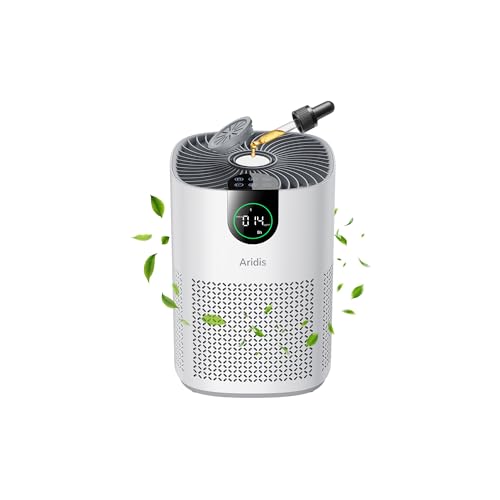

Would you like to take a look at the price Current list of the best-selling air purifiers:
Prices of best-selling air purifiers
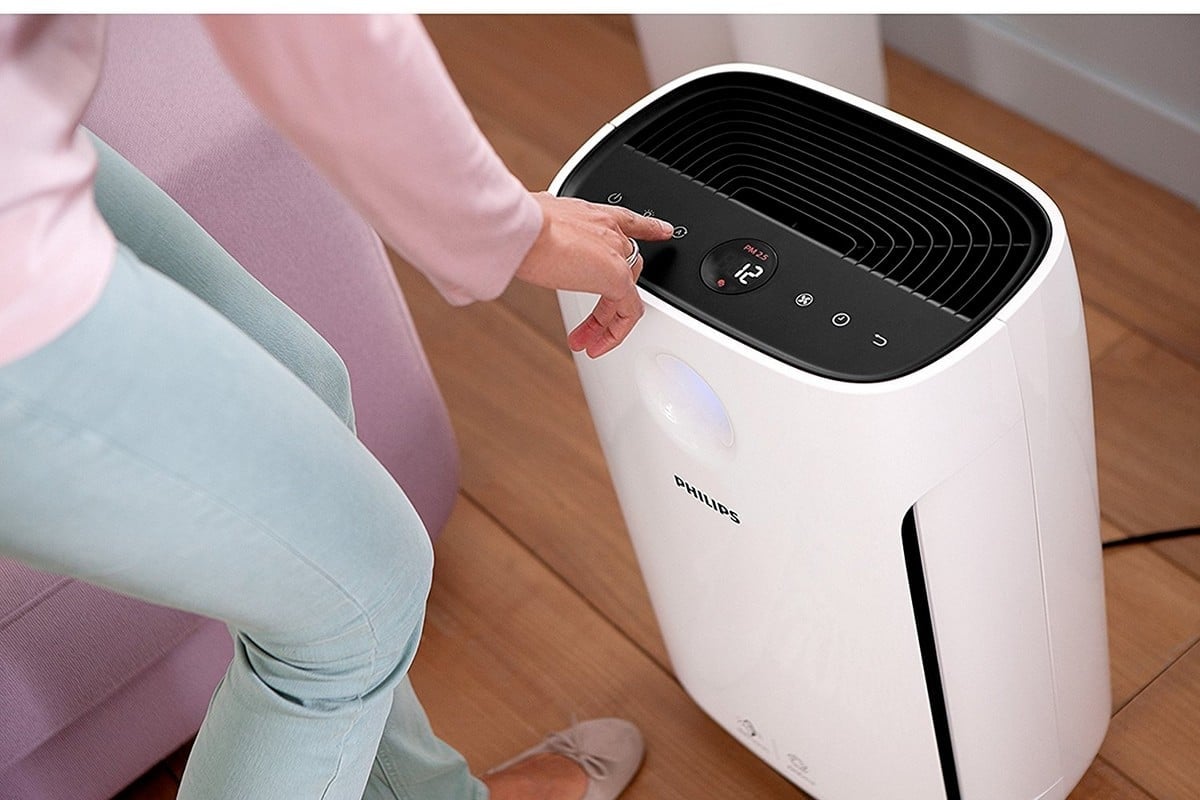
A good air purifier reduces the spread of harmful particles, allergens, and certain viral residues in the home. It helps reduce problems with’allergies orasthma related to the indoor air pollution.
It is of particular interest to those who want to protect their health, as well as companies that care about their employees' well-being.
Air Purifier Technologies to Avoid
Several technologies are still being sold today. Some are simply inefficient. Others can actually make indoor air quality worse if you use them in a closed room. That’s when the cure becomes worse than the disease.
Of the 2013, l'ANSES (National Health Security Agency) issued a warning about evidence of ineffectiveness of certain air purifiers, both in homes and in workplaces. The problem has not gone away. Many manufacturers still tout poorly explained “innovative” systems that are supposed to destroy pollutants or microbes.
Here are the main systems you'll find on the market, along with their practical limitations:
- Simple filtration: still very common and safe. The downside: it requires good air circulation to capture pollutants. A low-end filter allows the smallest particles to pass through.
- Photocatalysis: a catalyst for the titanium dioxide is activated by UV radiation. Without a physical filter, the volatile organic compounds (VOCs) are not captured. Worse still, the reaction may release’ozone and irritating byproducts.
- Ionization: The device electrically charges the ions in the air, which then stick to surfaces in the room. The result: the particles are displaced, not eliminated. Some models also emit ozone.
- Plasma: This system ionizes the air and creates free radicals. Depending on its design, it can generate reactive substances and ozone in an enclosed space. Its actual effectiveness varies widely from one product to another.
- Ozonation: Absolutely avoid doing this around other people. It produces’ozone (O3), a highly reactive gas that oxidizes everything in its path. In high doses, it becomes a real respiratory poison. The’EPA and theANSES do not recommend its use in occupied homes.
If an air purifier relies on the’ozonation, plasma, or photocatalysis without physical filtration—be wary. A good rule of thumb: the mention of “ozone-free” on the product page. To truly purify indoor air, look for a genuine HEPA filter, supplemented by a activated carbon filter against odors and VOCs.
Air Purifiers in 2026
In just a few years, air purifiers have made significant scientific advances. The’ANSES had initially issued a cautious statement. The’INRS in November 2020then the HCSP in May 2021, then laid out a clear policy: only devices equipped with a high-efficiency filter Filters designed to capture fine particles have proven effective in combating indoor air pollution. Other technologies (ionization, ozone, plasma) have not been shown to be effective and can sometimes be problematic.
Today, the uses go far beyond just the issue of virality. You might want to reduce the allergens During pollen season, filter the urban pollution that comes in through the windows, or to reduce pet odors and hair.
A good unit usually combines two stages of filtration. The HEPA filter traps particles and allergens for better indoor air quality.
Some models include a CO2 sensor. This isn't a filter, but a useful air quality indicator. It alerts you when the indoor air becomes polluted, usually when levels exceed 800 ppm. In this case, the best answer is still simple: let it air out for a few minutes to refresh the air in the room.
How to Choose a Good Air Purifier
You don't have to pay top dollar to effectively purify the air in your home. What matters is the filtration technology and whether the unit is the right size for your room.
Before you buy, check these three criteria:
- The CADR (clean air flow rate, in m³/h) indicates the volume of air filtered per hour. For effective filtration, the unit must replace the air in the room 3 to 5 times per hour. For a bedroom of 15 m² (standard height of 2.5 m, or approximately 37 m³), has a recommended CADR between 110 and 180 m³/h.
- The covered area The range advertised by manufacturers is often optimistic, since it is measured under ideal conditions. To be realistic, divide it by two : A model designed for 80 m² will be truly effective over approximately 40 m².
- The filtration level: aims at a H13 HEPA filter (the “True HEPA” standard). It captures 99.97 % of particles up to 0.3 microns, including pollen, allergens, and fine particulate matter. Vague statements such as “HEPA-like” do not offer this guarantee.
A activated carbon filter As a bonus, it makes all the difference when it comes to odors and volatile organic compounds (VOCs) from cooking, sprays, or cigarettes. This is the most effective combination for improving the indoor air quality on a daily basis.
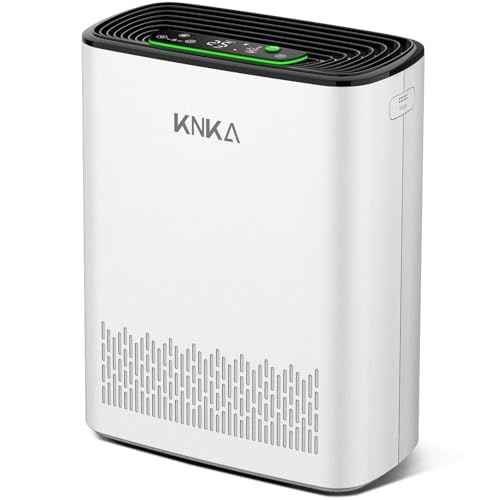
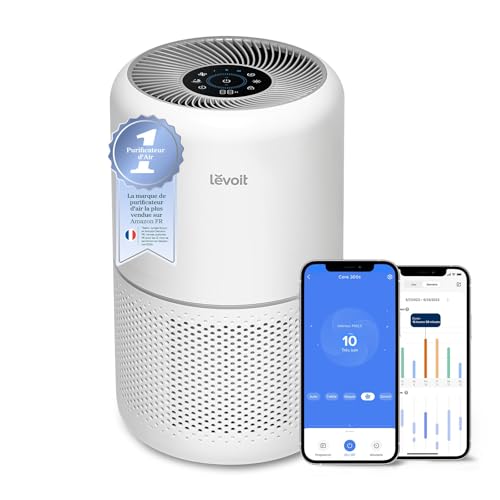
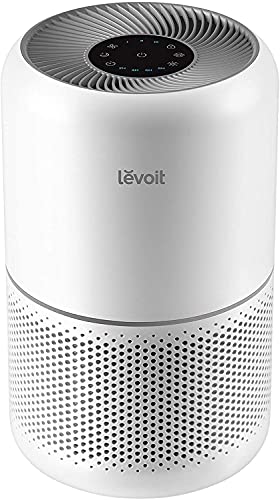
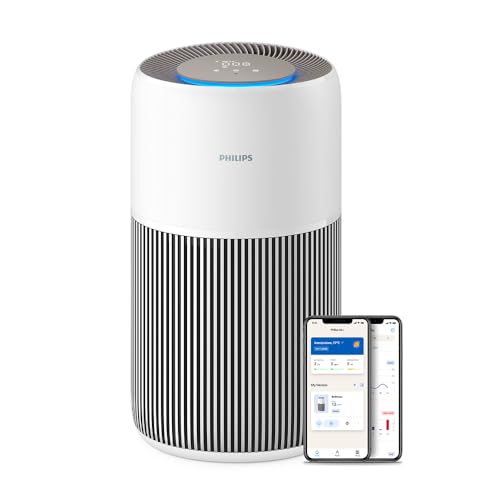
You'll find reliable, highly rated models on Amazon, from budget to premium, featuring trusted brands such as Levoit, Philips Where Rowenta.










 English