CC stands for «Carbon Copy» and CCI stands for «Invisible Carbon Copy». These are the two recipient fields available when you're composing an email.
The difference between CC and CCI is simple:
- The CC addresses are visible to all recipients,
- The ones in CCI remain hidden.
Knowing when to use the CC field or the CCI field lets you send your messages through the right email service to the right group of contacts without accidentally exposing any addresses. Here's everything you need to know!
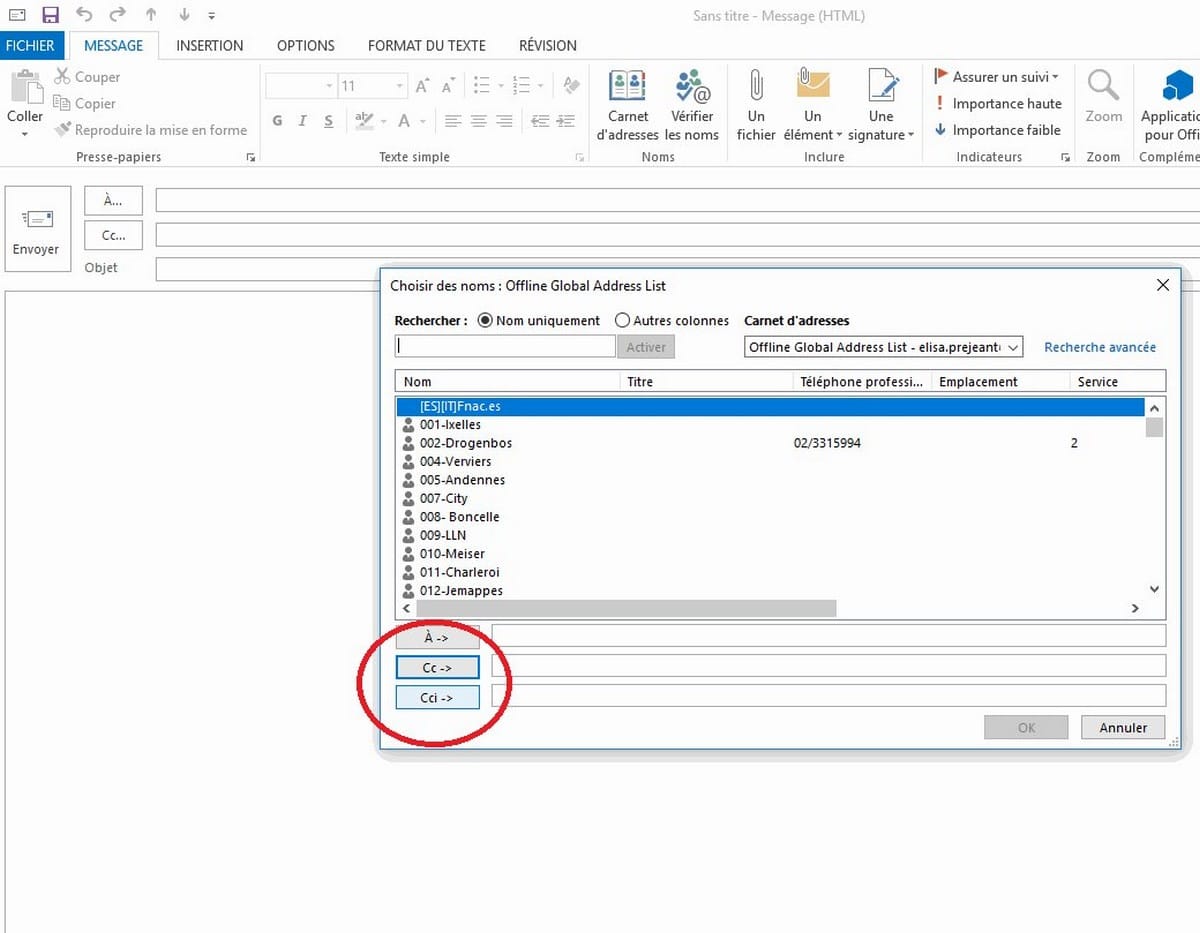
What do "CC" and "CCI" mean in an email?
When you write an email, you have three fields To provide information to your recipients:
- The «To» field» : the primary recipient(s), those to whom the message is directly addressed.
- The CC field : people copied on the email for information purposes, including the’e-mail address is visible to everyone.
- The CCI Field : recipients in blind carbon copy, whose email addresses remain hidden from the other recipients.
the CC field allows you to notify secondary recipients in a transparent manner. Each CC address appears in the email header. This means everyone knows who received a copy of the message. The sender uses CC when they want the recipients to see the complete list of people included in the exchange.
the CCI field works differently. Recipients in the BCC field do receive the email, but neither the primary recipient nor the recipients in the CC field know that they have received it. The BCC feature thus protects email addresses: no one in the group can see the other recipients who are hidden in the BCC field. This is the most important difference between CC and BCC to remember.
Here's a quick overview:
| Field | Means | Who can see these addresses? | When to Use It |
|---|---|---|---|
| CC | Carbon Copy | All recipients | Keep someone fully informed |
| CCI | Invisible Carbon Copy | No one except the sender | Send to a group while keeping the addresses private |
When should you use CC and CCI?
The choice between CC and CCI It all comes down to one question: Do you want the recipients to see each other's addresses, or not? In practice, each field has its own distinct function in your email system.
When to Use the CC (Carbon Copy) Field
You put a person in CC when she needs to read the message but isn't the primary recipient. She receives a copy for information purposes and isn't required to reply. Using the CC field is ideal when transparency is needed: everyone can see who's in the loop.
- To keep someone informed about a conversation without requiring them to take any action.
- When all recipients need to see who the email was sent to, for the purpose of transparency.
- To copy multiple contacts from the same team into the same message.
Practical example : You send a quote to a client and CC your manager so they can follow along with the conversation. The client sees their email address, and your manager doesn't need to do anything else. The email addresses of people in the CC field are visible to everyone.
When to Use the CCI (Invisible Carbon Copy) Field
the CCI field is used to add recipients without revealing their addresses to others. It's the perfect tool when you're writing to a large group of contacts, for example from Gmail. The CCI feature keeps addresses private: no one on the list can see who else received the email.
- For a bulk mailing to an entire list of contacts, without revealing their email addresses to one another.
- For a marketing campaign or a newsletter, where each recipient should not be able to see the addresses of the other members of the group.
- To send a sensitive message that includes a third party without the primary recipient knowing.
Practical example :
You’re having an issue with a coworker, so you send them an email and BCC the HR department. The HR department receives a copy for their records, but your coworker doesn’t see that they were included in the list of recipients. This is a common use of blind carbon copy in a professional setting.
Don't confuse the two fields: the CC emphasizes transparency, the CCI Protects your contacts' email addresses. Choosing the right option between CC and BCC helps you avoid unnecessarily exposing the email addresses of the people you contact.








 FR
FR  RU
RU  EN
EN  ES
ES  IT
IT  DE
DE  ZH
ZH  PT
PT  ID
ID  JA
JA  DA
DA
yeah