Shōjo is one of the major genres of Japanese manga. Aimed at teenage girls, it focuses primarily on relationships, emotions, and character development.
But how can you tell if a manga is shōjo? How is it different from shōnen? We'll tell you!
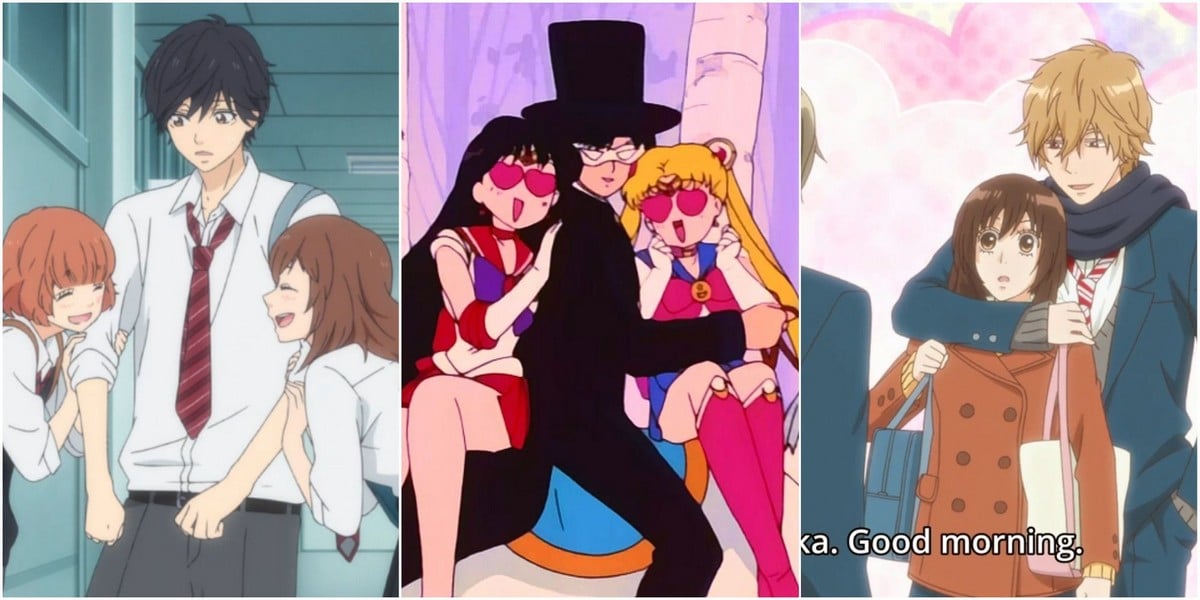
What is shoujo manga?
Shōjo manga emerged in Japan in Starting in the 1950s, in pre-publication magazines aimed at teenage girls. Shōjo (少女) actually means “young girl”!
In its early days, the genre was written primarily by men. But everything changed in the 1970s, when a group of Japanese female authors took the lead in shōjo and introduced new themes and visual styles. Even today, the genre is still overwhelmingly dominated by Japanese female authors.
Among the best-known are: Naoko Takeuchi (Sailor Moon), Natsuki Takaya (Fruits Basket), and Yuu Watase (Fushigi Yûgi).
The topics covered are very diverse:
- 💜 Romance and Love Triangles
- 💜 Snapshots of Life and Self-Discovery
- 💜 Fantasy, magic, and adventure
- 💜 Social issues: harassment, dropping out of school, family relationships
Themes evolve with each generation: modern shōjo manga tackle topics such as social media, juvenile delinquency, and domestic violence, in addition to the classic stories of love and friendship.
How can you recognize the style of a shōjo manga?
Beyond its themes, a shōjo manga is often recognizable by its style.
The illustrations feature soft lines, large, expressive eyes, and flowery backgrounds dotted with speech bubbles and stars.
The storytelling also leaves plenty of room for emotion: key scenes are drawn out, the panels break free from the traditional grid, and everything is designed to bring out the characters’ emotions.
It is these visual cues that give the genre its unique atmosphere.
Shōjo, shōnen, josei, seinen: What are the differences?
These four terms refer to demographics—that is, audience segments based on age and sex—not genders.
On one hand, there are categories for younger readers (shōnen for male readers, shōjo for female readers); on the other, there are those aimed at adults (seinen for men, josei for women).
- 📌 The Shōnen are aimed at teenage boys. Themes: adventure, combat, pushing one's limits (e.g., One Piece, Naruto, Demon Slayer)
📌 The Shōjo are aimed at teenage girls. Themes: emotions, relationships, self-discovery (e.g., Fruits Basket, Sailor Moon)
📌 Seinen target adult men with darker or more complex themes (e.g., Berserk, Tokyo Ghoul)
📌 Josei target adult women with themes similar to those in shōjo, but portrayed with greater realism (e.g., Chihayafuru, Paradise Kiss)
It is the magazine in which the series is published that determines the category, not the series' style or themes.
Since manga began to be exported around the world, it has reached a much wider audience. As a result, many male readers today enjoy shōjo manga just as much as teenage girls do!
Must-Read Shōjo Manga!
Want to get started? Here's a selection of manga Must-Read Shōjos!
- ⭐ Sailor Moon (Naoko Takeuchi): The 1990s classic that popularized the magical girl genre—featuring a magical heroine, friendship, and romance!
- ⭐ Cardcaptor Sakura (CLAMP): Another major title in the magical girl genre, featuring Sakura, a schoolgirl who discovers she has magical powers.
- ⭐ Fruits Basket (Natsuki Takaya): a lovable heroine, a family curse, and plenty of emotion. One of the best-selling shōjo manga series in the world.
- ⭐ Kimi ni Todoke : A shy teenage girl who learns to open up to others thanks to an outgoing classmate who becomes her friend.
- ⭐ Nana (Ai Yazawa): Two young women, one apartment, two lives that collide. This shōjo manga is aimed at a slightly more mature audience.
- ⭐ Shirayuki with red hair It follows an independent heroine in a fantasy world. It's an accessible shōjo manga with truly endearing characters.
- ⭐ Yona of the Dawn : A princess who takes up arms to reclaim her kingdom. Recommended even for shōnen readers who aren't used to the shōjo format.
- ⭐ The Rose of Versailles (Riyoko Ikeda): The story takes place in France, at the court of Versailles, just before and during the French Revolution. Published in the early 1970s, this classic left an indelible mark on the history of shōjo manga!
Looking for a place to read these titles online? Check out our guide at Where to find shōjo manga scans.
How is a manga classified as shōjo?
In Japan, each magazine targets a specific demographic.
For example, magazines like Margaret and Ribon publish only shōjo, while Shōnen Jump publishes only shōnen.
Thus, when a series is serialized in a shōjo magazine, it automatically inherits that classification, regardless of its themes.
That’s why some shōjo manga can have a lot of action, and some shōnen manga can feature very emotional stories. The demographic doesn’t dictate the content; it merely indicates the original target audience.
FAQ on Shōjo Manga
Is shōjo just for girls?
No.
Although the target audience was originally teenage girls, many male readers enjoy shōjo manga for the emotional depth of the characters.
Titles such as *Nana* and *Fruits Basket* have a very diverse readership.
What is the difference between shōjo and shōnen?
Shōnen is aimed at teenage boys, and shōjo at teenage girls.
In both cases, it’s not the content that defines the category, but the magazine that publishes the series. A shōjo manga can feature action, and a shōnen manga can explore complex emotions—there really are no limits!
What is the difference between shōjo and josei?
Shōjo is aimed at teenage girls, while josei is aimed at adult women.
The themes are often similar (relationships, emotions) but are handled with greater realism and maturity in josei.
Some titles, such as *Nana*, are sometimes classified under one category or the other, depending on the edition.
What are the most popular shōjo manga?
Some of the must-sees include:
- 💜 Fruits Basket
- 💜 Sailor Moon
- 💜 Kimi ni Todoke
- 💜 Nana
- 💜 Akatsuki no Yona
If you know of any other shōjo manga that are definitely worth checking out, feel free to share them with us in the comments!







 English